How to Obtain a Student Visa for the Netherlands
Many young people want to realize the dream of traveling and studying in one of the developed European societies, which provides modern education methods through the best schools and universities.
Students usually start looking for accredited scholarships that will enable them to travel abroad, without incurring the costs of studying in the Netherlands or other European countries with large and accredited universities.
Some also resort to searching for ways to submit asylum applications in order to guarantee their children advanced education opportunities, which will open up job prospects for them in any country after they complete all the stages of study that they must complete.
Follow our article with us on the Encyclopedia Europedia 24 europedia24.com to learn about the best ways to obtain study opportunities in the Netherlands and the most famous public and private universities in the country.
We will also inform you of the costs of studying at Dutch universities and how to register there, as well as the required papers and other information that will definitely benefit you so that you can obtain your opportunity for education in the Netherlands.



Advantages of education in the Netherlands
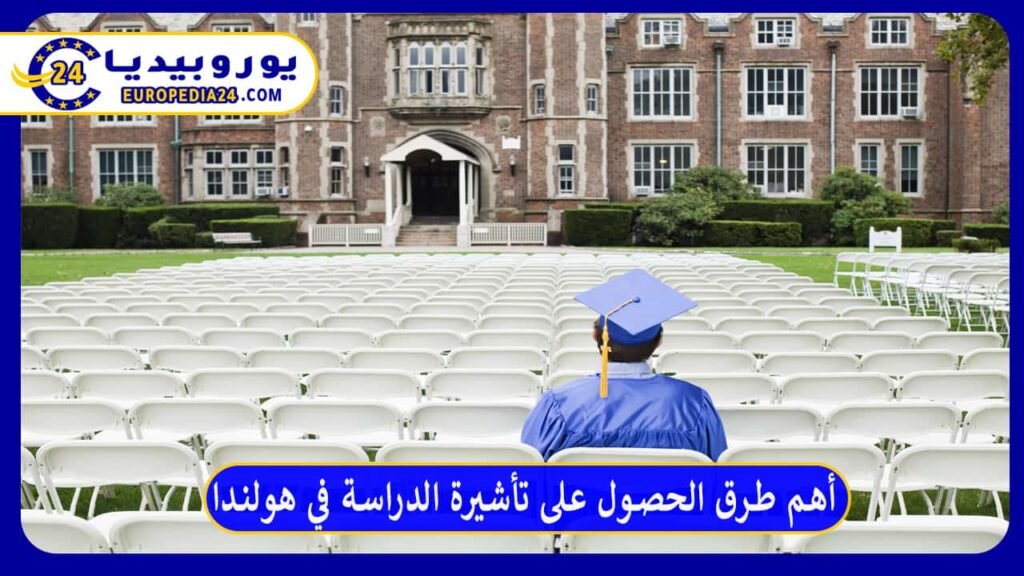
Studying abroad helps develop people’s personal skills and helps them learn about aspects of life and become more self-reliant, in addition to many other benefits.
With all these advantages, when searching for opportunities to study abroad, you must choose the country that provides you with the opportunity for a distinguished and sophisticated education.
Obtaining education opportunities in strong countries will help you expand your career opportunities and make major companies in any country rush to work for them.
Among the countries that provide distinguished educational opportunities is the Netherlands, where you can enroll in one of its universities to complete your studies.
We can explain to you the most important advantages of studying in the Netherlands through the following points:
- The Netherlands enjoys high quality in the educational field, whether in Dutch schools or universities, and it also offers distinguished programs for its students through academic and interactive activities that will help you develop your skills.
- You can choose the field of study in the Netherlands that you want, as the country offers a large variety of fields of study and modern technology.
- There are a large number of cultures in the Netherlands through the multiplicity of nationalities present in the country, which you will encounter during your studies, which will provide you with a great opportunity for cultural exchange.
- Fields of study in the Netherlands rely heavily on teaching in the English language, which enables students from all over the world to enroll in its universities.
- You will have a great opportunity to engage with the Dutch community, which is friendly and welcoming in its dealings with the people of other countries in the country.
- You can engage in a professional activity and work while studying in the Netherlands, as this is one of the things allowed for students from non-European countries.
Read also – The easiest ways to obtain permanent residence in Canada
Best public universities in the Netherlands
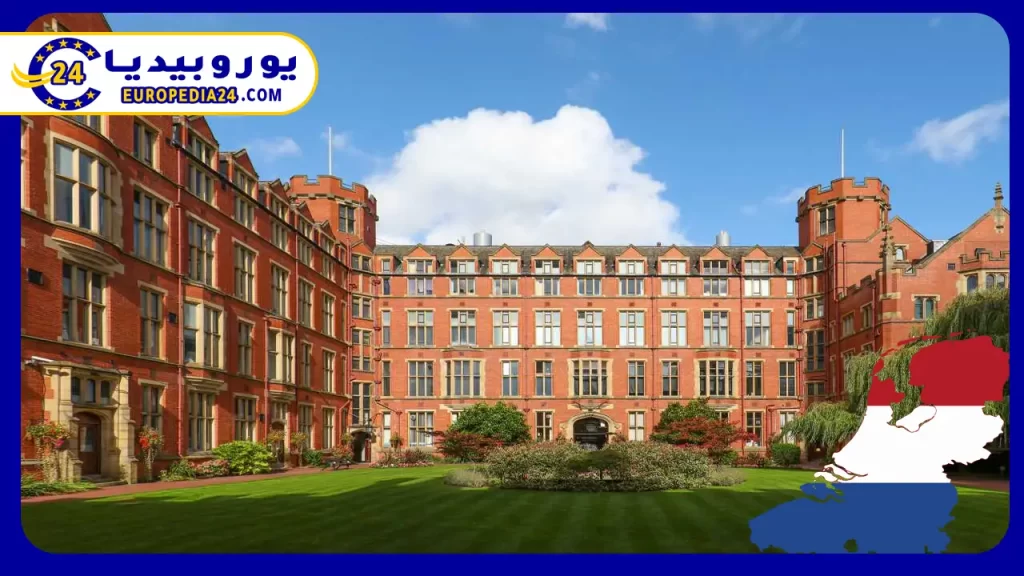
The Netherlands is one of the countries with a highly efficient education system, and although education in Dutch universities only began in the sixteenth century AD, its universities have the highest ratings globally.
The opportunity to study in the Netherlands provides a high-quality and distinguished education, through advanced academic programs, enabling students to obtain distinguished experience that will help them in the field of work.
All this development that you will encounter while studying in the Netherlands has made its universities obtain the highest international evaluations in the field of higher education, such as the QS evaluation of universities.
Among the most famous public universities in the Netherlands are the following universities:
Deft University of Technology
Delft University of Technology is one of the universities that provides distinctive educational programs to its students, whether Dutch citizens or foreigners, since its founding in 1842. It is also classified among the three technological universities available in the Netherlands.
University website: Deft University of Technology
University of Amsterdam
The university was founded in 1632, and since that time it has been offering distinguished educational programs. You can join it to study medicine, engineering, social sciences, or other distinguished fields of study.
University website: University of Amsterdam
Leiden University
Leiden University is one of the public universities in the Netherlands, and foreign and expatriate students can join it to study all fields of university education. It also holds leadership in the field of scientific research.
University website: Leiden University
University of Groningen
The University of Groningen is considered one of the oldest universities in the Netherlands where you can study and get a distinguished opportunity for education. The university was founded in 1614, and since that time it has been one of the leading universities in various fields of education.
University website: University of Groningen
Radboud University Nijmegen
The Dutch public university, Radboud Nijmegen, is one of the leading universities in many fields of higher education since it was founded in 1932. It also has a long history in the field of scientific research, which provides the student studying in the Netherlands with a distinguished opportunity internationally.
University website: Radboud University Nijmegen
University of Twente
The university was established in 1961 and is considered one of the most prominent public universities that you can join to achieve the dream of studying in the Netherlands, especially since it accepts foreign students and provides them with all means of support to adapt to the new environment.
University website: University of Twente
Read also – The comprehensive guide to Immigration to Sweden
QS Assessment for Universities
The QS assessment or Quacquarelli Symonds assessment is one of the global assessments that annually determines the best universities around the world, which is published by the British company Quacquarelli Symonds.
The list of the world’s best universities based on the QS assessment was previously published in the Times Higher Education newspaper until 2009, in an article called “The Times Higher Education and Quaccarelli-Symonds World Universities Rankings”.
Universities are ranked according to this evaluation based on the basic criteria followed by the nominated universities, and not on superficial factors that may be hidden or have no effect on students.
Evaluations are usually based on the level and quality of education, the research presented by students, and their skills during study and upon graduation.
Studying in the Netherlands for a bachelor’s degree

The duration of study in most Dutch universities is three years, and you can obtain an education visa in the Netherlands to register there, so that you can travel and begin studying.
Dutch universities adopt a system of study units during the bachelor’s stages, so you will find that you study 180 ECTS units of study, in order to obtain a bachelor’s degree in any specialty that you choose and register for yourself.
As for the specializations that are available in Dutch universities, they are as follows:
- Economy.
- Humanities and social sciences.
- Language and culture.
- Engineering.
- Basic sciences.
- the law.
- Medicine.
You can be completely reassured while studying in the Netherlands that you will receive a modern and advanced education, with universities keen to teach students academic and scientific programs in a professional manner.
Dutch education also depends primarily on developing students’ scientific skills.
Dutch universities are not satisfied with teaching students the information contained in the educational curricula, but rather seek to motivate them to develop and develop scientific research skills.
It even gives students the opportunity to take specialized courses in scientific research methods and the preparation of theses.
Studying at applied universities in the Netherlands may differ somewhat from other universities, in terms of the duration of study.
Universities that teach applied sciences grant a bachelor’s degree in the Netherlands to the student after he passes 240 ECTS credits, but the matter may differ between universities in the Netherlands even if the same scientific field is taught.
Once you graduate from Dutch universities and obtain a bachelor’s degree, you will find that you are fully qualified to experience the jobs of the future that will be waiting for you once you present your degree to companies.
Read also – Learn about the most important conditions How to obtain British citizenship
Studying in the Netherlands for a master’s degree
Dutch universities accept students wishing to obtain a master’s degree, provided that they have obtained a bachelor’s degree from one of the universities affiliated with the Ministry of Higher Education in their country, or at least the degree they have obtained has been approved by the Supreme Council of Universities.
You can apply for a master’s degree from the Netherlands if you meet the conditions required for application, which include proficiency in the English language based on it being the language of study in Dutch universities, and you must also obtain a score of 6.5 on the internationally accredited IELTS exam.
Determining the specialization for studying a master’s degree in the Netherlands is based on the student’s grades and choice, and these specializations are the most popular among students:
- Engineering.
- Economy.
- Business Administration.
The period of study for a master’s degree in the Netherlands takes only one year, in any of the specializations in which the student is enrolled, after which you can apply for and enroll in a doctoral degree, thus extending your period of stay in the Netherlands.
Master’s study costs in the Netherlands
The costs of studying for a master’s degree in the Netherlands vary according to the university you will enroll in and the specialty you will study, but in general the costs may range between 7,000 euros and 15,000 euros per year.
But master’s tuition fees in Dutch universities are not the only thing you must prepare in your budget while traveling, but you must also be aware that there are costs for living, health insurance, and other expenses.
Keep in mind that living in the Netherlands may require some expenses that are somewhat higher than what you would spend while in your country.
This is because you will need to pay housing rent, food and beverage expenses, and a special allowance for transportation, daily activities, etc., which may range from 800 euros to 1,200 euros each month.
You will also of course need to save some money for emergencies, and pay for your health insurance, which ranges between €80 and €150 per month.
Studying in the Netherlands for a doctoral degree

The dream of obtaining a doctorate degree eludes many young people, especially those who obtained the highest grades in their previous educational stages, starting with school, bachelor’s, and master’s degrees.
Obtaining a doctorate degree from prestigious universities in the Netherlands is one of the greatest achievements they can achieve throughout their academic life.
This is something that Dutch universities have made easy and simple and you can achieve it as soon as you meet the conditions for registration at your university.
The duration of study for a doctoral degree in the Netherlands differs from the periods spent by a student to obtain a bachelor’s or master’s degree.
Obtaining a doctorate from the Netherlands occurs after you have prepared a large group of research and dissertations and submitted them to university supervisors over four consecutive years.
Doctoral study in Dutch universities does not depend on curricula and exams in which the student must remember his lessons well before taking them, but rather depends entirely on developing and developing the research side of students, to prepare distinguished research in the English language.
Based on the fact that studying in Dutch universities is mainly in English, you must have taken the internationally approved IELTS exam and obtained a minimum score of 6.5 to be accepted into the doctoral stage in the Netherlands.
After completing the duration of your doctoral study in the Netherlands, which is four years, and you have submitted the set of research and theses required of you under academic supervision by university doctors and professors, you can apply to defend your thesis to obtain a doctorate degree.
How to obtain a study visa in the Netherlands
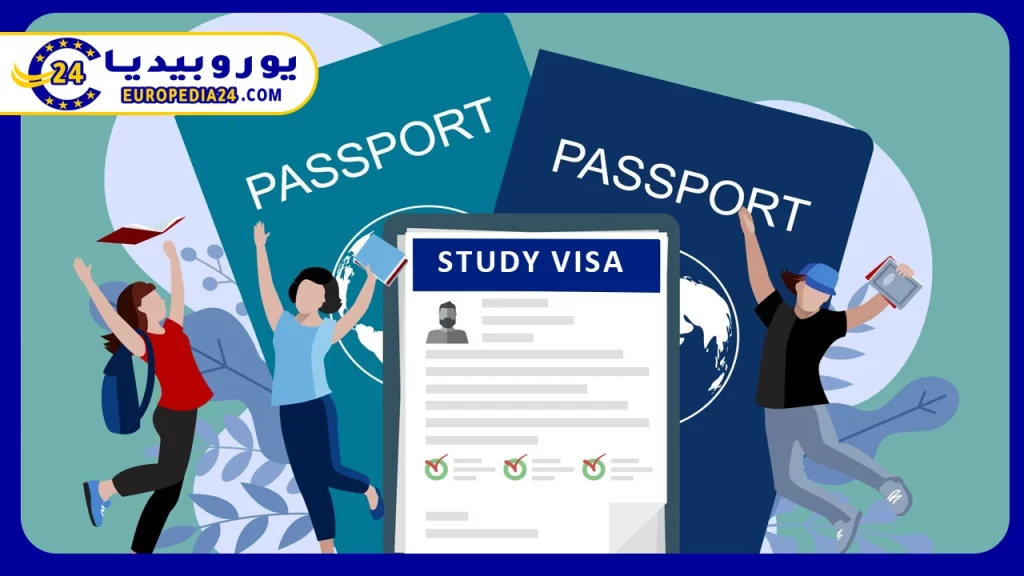
Before you learn about the costs of studying in the Netherlands, let us first tell you how to obtain a Netherlands education visa, which requires foreign students from non-European countries to be able to enroll in Dutch universities and schools.
The Netherlands Student Visa is one of the papers that you must provide in order to be able to register in Dutch universities and schools.
You can apply for it through the Dutch embassy in your country or via the Internet after you provide the required documents and complete all conditions.
Documents required to obtain a study visa in the Netherlands
Applying for a study visa at Dutch universities and schools requires some papers that you must provide before you register and travel to the Netherlands.
These papers are usually information about the student and his ability to bear the costs of living in the country, if traveling without a scholarship.
Documents required by the Dutch authorities for a student visa applicant are the following:
- Valid and recent passport:
Clear photos of your passport must be submitted when applying for a visa to study at Dutch universities and schools. It must not be more than ten years old, so that it is valid, and of course its validity period is sufficient until the end of the period of residence you wish to obtain.
Of course, the passport that you will submit to apply for a study visa in the Netherlands must have blank pages so that they can be stamped after the authorities approve your application.
- Personal photos with specifications determined by the Dutch Embassy:
To submit visa application papers, they must have two personal photos with the same specifications required to obtain a passport, and these must be recent photos that are not more than six months old.
- Identity documents:
The original birth certificate and a document proving the applicant’s identity must be submitted to the Dutch Embassy.
- Income Proof Document:
Proof of financial income is an important document in applications for a Dutch visa for the purpose of travel to study, and it is usually either a letter from the bank about your personal account balance, or any other proof that indicates your ability to bear the costs of living while studying.
- Proof of accommodation:
You must book a place to stay in the Netherlands during the period of study, either a house that you rent or a room in a hotel in the Netherlands, or another place of residence in which you are allowed to stay throughout the period of your study.
- Your previous educational certificates:
If you are applying for a bachelor’s degree in the Netherlands, you must provide proof that you have graduated from official secondary schools and obtained bicycles that qualify you to enroll in Dutch universities, and the same applies to every educational stage.
- Travel medical insurance policy:
You must obtain medical insurance during travel that enables you to obtain the necessary medical treatment and care, and submit the document proving this in the application papers for obtaining a Dutch visa.
- Documentation and translation of all visa application papers:
Document your papers that you will submit to the Dutch embassy when applying for a study visa in the Netherlands after you have translated them into Dutch and English.
Where to apply for a study visa in the Netherlands
You can apply for a study visa in the Netherlands by going to the Dutch embassy or consulate in your country, and the centers responsible for receiving applications for a Dutch visa.
Prepare the required papers that we mentioned above after ensuring that they are complete and meet the conditions, then go to the address of the embassy in your country. You should be aware that the papers differ somewhat depending on the type of visa you wish to obtain.
You can also apply for a Dutch visa for study or any other purpose.
The deadline for applying for a study residence visa in the Netherlands
If you intend to apply for a Dutch visa on a dog, you must note that you must submit the application sufficiently in advance of the scheduled travel date, at least fourteen days before your travel, or no more than 6 months.
Processing time for the Netherlands visa application by the embassy
The processing time for Dutch visa applications may take, depending on several factors, which can be viewed through the following points:
- The purpose of the visa, as the processing time for a study visa in the Netherlands is different from the time it takes to obtain a tourist, work, or any other type of Dutch visa.
- The place where you applied to obtain a visa to travel to the Netherlands may cause a slight delay in the paperwork, depending on the response of officials at the embassy or consulate to the speed of processing applications.
- The processing of applications for a Netherlands visa may be delayed for some applicant nationalities, due to restrictions imposed by the country for these nationalities.
How to apply to Dutch universities via the Internet
In order to be able to apply to study in the Netherlands at one of the prestigious universities available there, you must verify the availability of the required conditions and complete the application papers that we mentioned above.
You must also write to the university you wish to attend so that you can travel and study in the Netherlands. This is done by following the following steps:
- Choose the university you want to study at in the Netherlands, and enter the link to its website.
- Choose the specialty in which you would like to complete your education.
- Submit an application, which you will find in the admission center on the university’s website.
- Send the required documents after you have met all the conditions for translation and international documentation.
- Wait for confirmation of your university admission application, which is usually sent to your email after you have registered it in your application to study at a Dutch university.
- Complete the procedures for obtaining a study visa in the Netherlands so that you can travel and begin a new educational stage.
Requirements for applying to study in the Netherlands
In order to be able to enroll in Dutch universities, travel and obtain a visa, you must meet the following conditions:
- Providing a valid passport for the applicant applying for registration in Dutch universities.
- The academic qualification certificate obtained, provided that it is internationally accredited.
- The university acceptance letter that you obtained after writing to the university you would like to attend.
- Submit a study plan proving the availability of the specialization you want to study in Dutch universities.
- A statement proving the ability to bear the expenses of living and studying in the Netherlands.
- The document for health insurance during travel.
- The receipt showing your payment for the visa application.
- Submit health certificate documents proving that you are free of infectious diseases, which must comply with the requirements imposed by the university where you will be applying to study.
- Prepare originals and photocopies of the required documents to be submitted upon request, after they have been translated into Dutch and English and documented so that they can be dealt with internationally.
Dutch universities that teach in English

Most Dutch universities provide study in English, due to the fact that these universities accept students from all over the world, and the difficulty for them to learn the Dutch language.
There are also a number of universities and institutes in the Netherlands that provide English language courses to teach foreign and expatriate students so that they can follow and remember their lessons.
In general, you can choose the university you want and enroll in it through the procedures we mentioned, and among the best universities that you can study in the Netherlands are the following universities:
- Wageningen University and Research Center
Which you can apply to study in the Netherlands through this link .
- Utrecht University
Which you can apply through this link .
- Maastricht University
Which you can apply through this link .
- Erasmus University Rotterdam
Which you can apply through this link .
- Vrije Universiteit Amsterdam
Which you can apply through this link .
FAQ about studying in the Netherlands
What is the language of instruction in the Netherlands?
Study in most Dutch universities is in English.
What is the second language in the Netherlands?
German is the second language in the Netherlands.
Is studying in the Netherlands good?
Yes, there is a large group of universities in the Netherlands that are ranked among the best universities around the world.
A concise answer based on search intent
Do you dream of studying abroad in a European country that provides modern education opportunities? In summary: This guide helps you understand the topic in the Netherlands, explaining what to check before making a practical decision.
How to use this information with confidence
The value here is not only in displaying information, but in linking it to an actionable step: Do you need to make a reservation, submit an order, compare a cost, review a legal requirement, or confirm with an official body? So we added verification points and direct sources that reduce the possibility of error.
Checks to make before deciding
- Compare the conditions with the university or official educational body’s page before paying any fees.
- Review the language requirements, funding, and deadlines for the program itself, not for the country in general.
- Keep a separate list of documents so that the study conditions and visa conditions do not get mixed up.
Official sources and trusted references
Frequently asked questions
Do the details differ within the Netherlands from one city or destination to another?
Yes, many practical details may differ depending on the city, institution, or type of request, so you must refer to the source responsible for your specific case.
Can you rely on this article alone?
The article helps you understand the picture and take a more conscious step, but it does not replace the official source or specialized advice if the decision is legal, financial, or academic.
Editorial note: This content was editorially revised on July 11, 2026 to add a clearer answer to the researcher’s intent, authoritative sources, and practical checkpoints that enhance trust and expertise.
This post is also available in:
 العربية