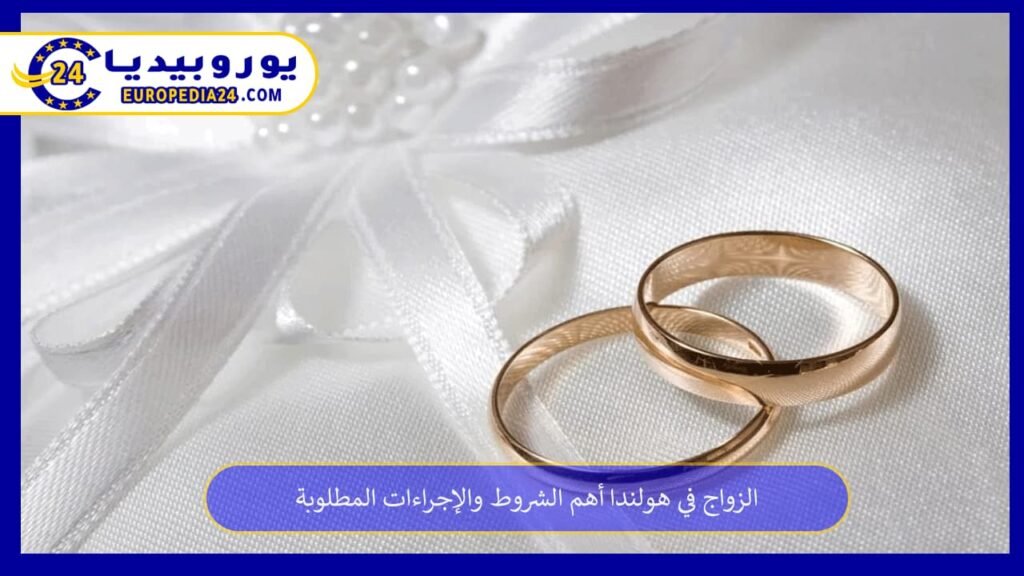
Marriage in the Netherlands: Key Requirements and Procedures
Marriage in the Netherlands is governed by a set of legal procedures and regulations that must be followed to ensure the union is officially and legally recognized.
Spouses in the Netherlands enjoy equal rights in areas such as employment, social security, taxation, voting rights, and residency.
Requirements for Marriage in the Netherlands
The main requirements for getting married in the Netherlands are as follows:
- You must be legally residing in the Netherlands, meaning at least one of the partners is a Dutch citizen or holds a valid residence permit.
- Both partners must be over 18 years old and not currently married to someone else.
- The marriage ceremony must take place at the municipality, in accordance with the regulations of the local council where you live.
- Submit an application to the municipality to schedule the ceremony.
- Select a date for the marriage ceremony.
- Obtain an official marriage certificate.
Marriage Procedures in the Netherlands
The procedures for getting married in the Netherlands include:
- Submitting an application to your local municipality to arrange a date for the marriage ceremony, usually through the municipality’s official website.
- Ensure that the application meets all the required conditions to complete the marriage process.
- Submit all necessary documents for the ceremony, including passports, birth certificates, previous marriage certificates (if applicable), divorce certificates (if applicable), and any other documents depending on your personal circumstances.
- Hold the official marriage ceremony at the local municipal office in the case of a civil marriage. For a religious marriage, the ceremony takes place at the designated place of worship, after which the marriage must be registered with the municipality.
- Collect the official marriage certificate issued by the local municipal office as legal proof of marital status.
Key Tips for Getting Married in the Netherlands
If you are planning to get married in the Netherlands, here are some useful tips to help ensure a smooth process:
- Make sure all legal requirements for marriage in the Netherlands are fully met.
- Reach a clear agreement with your partner on all matters related to marriage, including cultural, financial, and family considerations.
- Plan carefully for married life, covering expenses, housing, employment, and family matters that require coordination and mutual understanding.
- Seek emotional support from close family members or friends.
- Maintain open communication and mutual understanding to overcome any potential challenges.
Islamic Marriage in the Netherlands
Dutch authorities permit Islamic marriages, provided that all required legal conditions and Dutch laws are fully respected.
Individuals wishing to enter into an Islamic marriage in the Netherlands must first register the marriage at the official municipal marriage office and submit all required documentation.
Once the paperwork has been completed and approved, the couple can proceed with the marriage ceremony in accordance with the applicable procedures in the Netherlands.
Rights and Responsibilities of Spouses in the Netherlands
The responsibilities of spouses in the Netherlands include:
- Sharing responsibility for raising children.
- Dividing household duties between both partners.
- Providing emotional and financial support to one another.
- Honoring all commitments agreed upon before marriage.
The rights of spouses in the Netherlands include:
- Equality in all rights and obligations related to marriage.
- Making joint decisions regarding married life.
- Access to legal and financial support in the event of separation.
- The possibility to apply for Dutch citizenship, provided that at least one year has passed since the marriage.
- Enjoying parental leave upon the birth of children.
Best Tourist Destinations in the Netherlands for a Honeymoon
The Netherlands offers many unique tourist destinations ideal for couples celebrating their honeymoon. Some of the most popular locations include:
- Amsterdam
- Zaanse Schans
- The Hague
- Zeeland
- Groningen
- Friesland
- Arnhem
- Maastricht
Frequently Asked Questions About Marriage in the Netherlands
What documents are required to complete the marriage procedures in the Netherlands?
Completing a marriage in the Netherlands requires preparing several documents, including passports, birth certificates, previous marriage or divorce certificates (if applicable), and other documents depending on the couple’s circumstances.
Is it possible to have an Islamic marriage in the Netherlands?
Yes, the Netherlands allows Islamic marriages on its territory, provided that all legal requirements and Dutch regulations are fully observed.
Short answer for search intent
Marriage in the Netherlands is governed by a set of legal procedures and regulations that must be followed to ensure the union is officially and legally recognized. In practical terms, this guide helps readers understand the topic in the Netherlands and what should be verified before taking action.
How to use this information with confidence
The value is not only the information itself. It is connecting the information to the next practical step: booking, applying, comparing costs, checking a legal rule or verifying an official source.
Checks before making a decision
- Verify profession rules, salary context and qualification recognition before relying on broad averages.
- Compare expected income with rent, tax and insurance costs in the target city.
- Do not share documents or pay recruitment fees before verifying the employer or channel.
Official and reliable references
Frequently asked questions
Yes. Many practical details can differ by city, institution, route or application type, so verify the source responsible for your exact situation.
Can I rely on this article alone?
The article helps you understand the context and take a more informed step, but it does not replace official guidance or specialist advice for legal, financial or study decisions.
Editorial note: This content was editorially reviewed on July 11, 2026, with clearer search-intent answers, official references and practical verification points added.
This post is also available in:
 العربية