How to apply for immigration to Austria and obtain a visa
If you are considering immigrating to Austria, this article on the Europedia 24 encyclopedia will provide you with a comprehensive guide to understanding the process, requirements, and associated benefits.
Since the global refugee crisis in 2015, immigration to Austria has become a major topic of debate and interest. Many people look to Austria as a potential destination to start a new life and take advantage of available educational and professional opportunities.
Austria has a rich history and diverse culture, and it offers an excellent healthcare and education system, as well as good job opportunities. However, there are also challenges that immigrants may face in this country.
Overview of Austria and its beauty
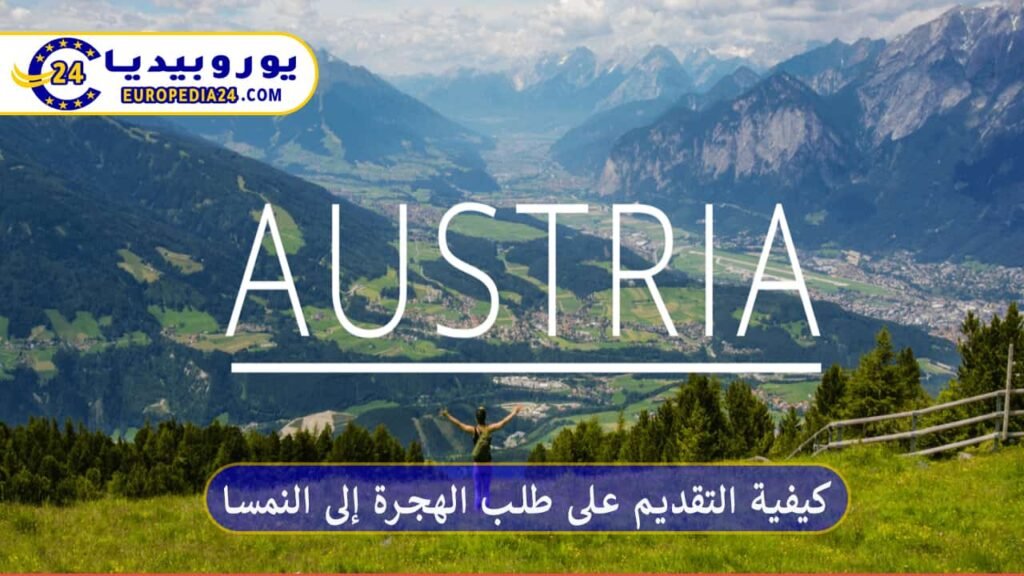
Austria, officially the Republic of Austria, is a federal, landlocked country located in Central Europe. It is bordered by the Czech Republic and Germany to the north, Hungary and Slovakia to the east, Slovenia and Italy to the south, and Switzerland and Liechtenstein to the west.
The Austrian territory covers an area of 83,855 square kilometers and has a population of approximately 8.7 million people.

Austria is a country with a rich history and diverse cultural heritage. From ancient Roman temples to magnificent Habsburg castles, Austria contains a wealth of historical landmarks.
In addition, the famous Austrian composer Mozart is considered one of the greatest musical geniuses in history.
Immigrants can enjoy exploring and integrating into this unique cultural heritage and take a tour of the most beautiful places across Austrian territory.
When immigrating to Austria, you will find that it has an excellent healthcare system that covers all residents of the country, including immigrants.
Migrants can benefit from specialized healthcare and advanced treatments without the need for private health insurance, as Austria’s healthcare system enjoys a high global reputation due to its high level of care and strict standards.
The official language in Austria is German, and speaking German is important for communication and integration into Austrian society.
Learning and acquiring the German language may require some effort and time, but it is very beneficial for daily communication and obtaining better job opportunities in Austria.
Also read – The comprehensive guide to immigration to Sweden
Cost of living in Austria

Anyone who wishes to immigrate to Austria must be aware of the cost of living in Austria, as the country is considered one of the most expensive countries in Europe.
Housing and living expenses can be costly in major cities such as Vienna and Salzburg. However, affordable housing options can be found in rural areas or smaller cities.
The cost of living in Austria is generally high and is influenced by several factors, such as the city you live in, your lifestyle, and your personal needs.
In Austria, housing and rent are among the main expenses, and the real estate market is booming with high rental prices, especially in major cities like Vienna and Salzburg.
In addition, other living costs that must be considered when deciding to immigrate to Austria include food, transportation, healthcare, entertainment, leisure activities, and communication costs.
Despite the high cost of living in Austria, it also offers a high level of services, excellent infrastructure, a high quality of life, and good job opportunities, making it an ideal destination for living and working.
It is important to carefully plan and set an appropriate budget to cover living costs in Austria and ensure financial stability during your stay there.
Types of immigration applications to Austria
Austria offers diverse and exciting opportunities for immigrants from all over the world. Whatever your goal for immigrating to Austria, you will find a welcoming environment and multiple opportunities to achieve your dreams and improve your life.
The Austrian system provides support and assistance to immigrants in various fields, as there are non-governmental organizations and government institutions that offer reception, guidance, and training services for immigrants.
Immigrants should be aware of their rights, options, and available sources of support before applying for immigration to Austria.
The country also offers several types of immigration to Austria that you can choose from according to what suits you, including:
- Immigration to Austria through marriage (family reunification).
- Immigration to Austria for work.
- Immigration to Austria for study.
- Humanitarian immigration to Austria.
- Immigration to Austria for investment.
- Immigration to Austria through a tourist visa.
Immigration to Austria through marriage (family reunification)
Family reunification or marriage-based immigration is one of the common types of immigration to Austria, as many people migrate to Austrian territory to provide stability and better opportunities for their family members.
This category includes spouses, children, and family members who are already residing in Austria. To obtain a family reunification visa, some documents and requirements specified by the Austrian authorities must be provided and fulfilled.
It is also possible to immigrate to Austria through marriage to an Austrian citizen and obtain Austrian residency and citizenship. When a person marries an Austrian citizen who holds an Austrian passport,
the foreign spouse can obtain Austrian citizenship and an Austrian passport after 4–5 years of marriage, according to the specified conditions, provided that the person remains married during those years and is not divorced.
Requirements for obtaining Austrian citizenship include respect for Austrian law, good moral conduct, knowledge of the German language, and no criminal record.
Also read – How to immigrate to the United Kingdom through marriage
Immigration to Austria for work
Austria offers broad and diverse job opportunities for people wishing to immigrate for work purposes. Immigrants can work in various sectors, ranging from logistics to technology and healthcare.
Immigrants who wish to work in Austria must obtain the appropriate work visa and have their application approved by an employer, or obtain a job-seeker visa.
Documents required for work-based immigration to Austria
To immigrate to Austria for work, a number of required documents must be submitted, including:
- Employment contract: A valid employment contract signed by a reliable employer in Austria, including job details, salary, and employment duration.
- Passport: The passport must be valid and have sufficient validity for residence and work in Austria.
- Work visa: Austria may require a work visa before traveling. You must apply for a work visa and meet all specified requirements.
- Educational and experience certificates: In some cases, you may need to provide educational certificates and relevant work experience documents.
- Personal documents: You may be required to submit personal documents such as a birth certificate, marriage certificate (if required), divorce certificate (if applicable), and personal photos.
- CV: You must submit your CV, highlighting your education, experience, and skills that qualify you for work in Austria.
- Medical certificate: You may be required to undergo a medical examination and obtain a health certificate proving that you are medically fit and free from infectious diseases.
- Health insurance: You must provide valid health insurance coverage to access healthcare in Austria, and an insurance document may be required.
Immigration to Austria for study
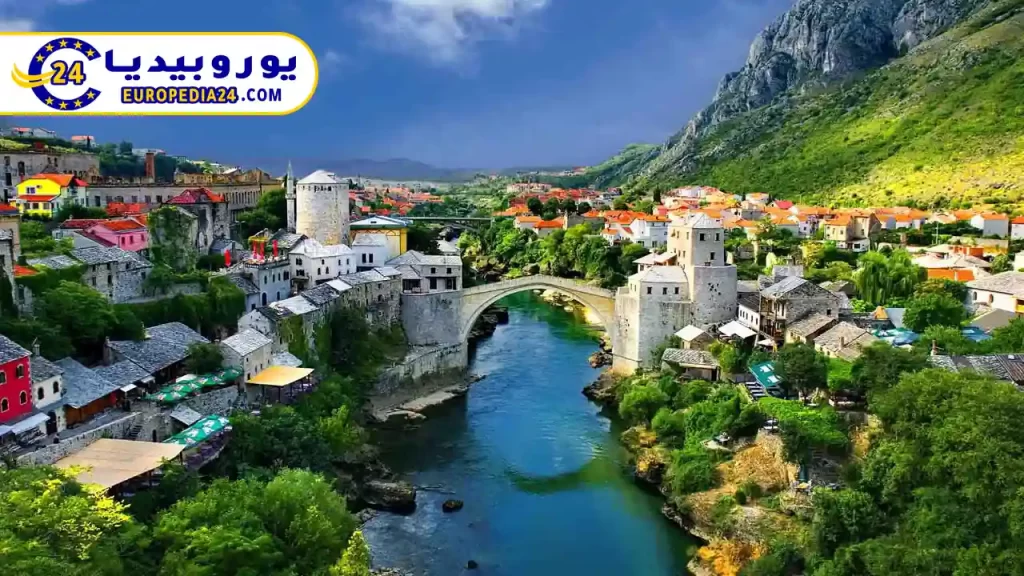
Austria is considered an ideal destination for international students seeking to continue their higher education, as it has a number of prestigious universities and higher education institutions that offer a wide range of academic programs.
To study in Austria, international students must apply for a student visa and comply with the requirements set by the target university.
Austria provides full academic and educational facilitation through high-quality universities, and immigration to Austria for study offers exciting and unique opportunities; however, it requires verifying the conditions of Austrian universities.
You must have at least a B1 level in the German language to enroll in various levels of education in Austria. In addition to the language certificate, you will also need to submit a CV for studying in Austria.
For studying at public universities in Austria, you must have German language skills and complete some university courses.
When enrolling in certain fields in Austria such as music, economics, and journalism, you may also need to pass an entrance exam. Public universities in Austria are considered almost free and have very low tuition fees.
You can also study at a private university in Austria in English, but you must still have a minimum level of German proficiency.
The cost of studying at a private university in Austria ranges between 7,000 and 15,000 euros, and students are allowed to work full-time during their studies in Austria if they intend to work in the country.
Documents required for immigration for study purposes in Austria
To apply for immigration to Austria for study purposes, a number of documents and procedures must be followed professionally:
- Completed application forms: The required application forms must be filled out correctly and all required information completed accurately.
- Valid passport: A clear copy of a valid passport containing correct personal information must be submitted.
- Payment of required fees: There may be fees applied to the immigration application, which must be paid according to the provided instructions.
- Two passport photos: Two copies of a valid passport must be provided.
- Proof of intent to return home: The study immigration application may require proof of intent to return to the country of origin after the end of the specified residence period.
- University acceptance letter: If you are applying to study in Austria, you must provide an acceptance letter from the relevant university or educational institution.
- Proof of financial means: You must provide proof of sufficient financial resources to fund your stay as a student in Austria, usually requiring a specified monthly amount.
- Proof of health insurance: You must provide proof of valid health insurance coverage to cover healthcare costs during your stay in Austria.
Also read – The most important ways to obtain a study visa in the Netherlands
Humanitarian immigration to Austria
Humanitarian immigration is the process of individuals moving from one region to another in search of protection, safety, and better living conditions.
Humanitarian migration is usually driven by human and social motives, as individuals seek to escape wars, persecution, conflicts, difficult economic conditions, or other unsustainable situations.
Humanitarian immigration to Austria is characterized by its personal nature, as individuals seek to protect themselves and their family members and achieve better life opportunities.
Humanitarian immigration may include asylum, where individuals seek international protection and care in another country, or migration for other reasons such as work, study, or family reunification.
Austria receives migrants fleeing conflicts and difficult humanitarian situations. It provides protection and support to individuals who need asylum and is considered a safe and reliable destination for many refugees.
Documents required to apply for humanitarian immigration to Austria
Humanitarian immigration procedures vary according to local and international laws and policies. However, in general, to apply for humanitarian immigration to Austria, you need to submit a set of required documents, including the following:
- Passport: The passport must be valid and in force.
- Immigration application form for Austria: The application form must be completed correctly and all required information filled in accurately.
- Personal documents: You may need to provide a birth certificate, marriage certificate (if required), divorce certificate (if applicable), and personal photos.
- Criminal record: You may be required to provide a clean criminal record certificate from your country of origin.
- Financial evidence: You must provide proof of available financial means, including bank accounts, savings, and other financial guarantees.
- Medical certificate: You may be required to undergo a medical examination and obtain a health certificate proving that you are medically fit and do not pose a health risk to Austrian society.
- Documents related to humanitarian reasons: You must provide documents explaining the humanitarian reasons that drive you to immigrate to Austria, such as protection certificates or international monitoring reports.
- Health insurance: You must provide health insurance that covers healthcare costs.
Immigration to Austria for investment

Austria offers investment immigration programs for individuals who wish to invest in the Austrian economy. Immigrant investors are required to invest in Austrian businesses, real estate, or other assets, and to comply with certain financial conditions and requirements.
Successful investors who have viable business plans and innovative ideas are given the opportunity to invest in Austria and obtain Austrian residency and citizenship.
However, it should be noted that in some cases, such as real estate purchases, this does not necessarily lead to permanent residency or Austrian citizenship.
Successful investors seeking to invest in Austria can benefit from the country’s thriving business environment and diverse markets.
Investors coming to Austria must submit promising and sustainable business plans and ideas, which are carefully evaluated by the relevant authorities. This may include providing details about the planned investment, its prospects, and the expected contribution to the Austrian economy.
Although real estate investment may be a common option for investors, it does not necessarily guarantee permanent residency or Austrian citizenship.
A variety of conditions and requirements must be met to obtain permanent residency and Austrian citizenship, and these requirements vary depending on the type of investment and its impact on the Austrian economy.
In general, immigration to Austria through investment is an attractive opportunity for ambitious investors with a strategic investment vision.
Interested investors should contact the relevant authorities in Austria and consult a specialized lawyer to understand the specific requirements and procedures for investment and obtaining residency and citizenship.
Types of investment immigration to Austria
- Company registration in Austria
Obtaining residency in Austria through establishing and registering a company requires additional procedures, as the applicant must submit an innovative business plan that can create a positive economic impact in Austria.
Company establishment permits and residency are granted to emerging founders who are able to apply for residency based on new business ideas.
Instead of relying solely on company registration as a way to obtain residency in Austria, individuals are required to submit an innovative and advanced business plan, which is then evaluated by Austrian authorities to determine its feasibility and economic impact.
The business plan must be innovative and have the potential to create positive change and contribute to the Austrian economy. Startup company permits and residency are considered an exception and an opportunity for individuals with innovative business ideas that stimulate the Austrian economy.
This opportunity provides a platform for ambitious individuals who wish to contribute to economic development and create positive change in Austria.
- Self-protection residency
Self-residence is one of the financial options that individuals can benefit from to obtain residency and an opportunity to immigrate to Austria without the need for investment. Through this type of residency, the individual provides proof that they have deposited an amount of 22,000 euros in their personal bank account and that they have a fixed monthly income in their home country.
Although the person is not allowed to work in Austria under this type of residency, they may act as a business owner and start a commercial project.
Self-residence allows individuals to benefit from residency in Austria, such as access to advanced infrastructure and high-quality public services.
In addition, this type of residency in Austria provides an opportunity to live in a safe and stable environment and enjoy the high quality of life that Austria offers.
It is important for the individual benefiting from self-residence to comply with the conditions and requirements specified for this type of residency, and they must maintain the required financial amount in their personal account and provide the required fixed income.
The individual should also understand the restrictions regarding the lack of work rights and make use of this residency to start a business project that meets their needs and goals.
Immigration to Austria through a tourist visa
To enter Austria, holders of non-EU passports are required to obtain a tourist visa. However, a small number of citizens are allowed to enter Austria and stay for up to 90 days without a visa, such as Canadian and American citizens.
Austria is a member of the Schengen Area, and a Schengen tourist visa is granted to non-EU citizens, allowing holders to travel and visit any country within the Schengen agreement for up to 90 days.
It is worth noting that a Schengen tourist visa does not allow the holder to work while staying in Austria or any other Schengen country.
Documents required to obtain a tourist visa for Austria immigration
To apply for a tourist visa to Austria, the following documents are required:
- The tourist visa application form must be completed accurately and signed.
- Two identical recent passport-sized photos must be provided.
- The passport must be valid for at least three months after the date of departure from the Schengen Area, must not be older than 10 years, and must contain at least two blank pages.
- A copy of the passport must be submitted.
- If you have previous Schengen visas, copies of them must be provided.
- Travel insurance must be provided confirming your ability to cover emergency medical costs of at least 30,000.
- Health insurance covering emergency medical cases worth 30,000 must be provided.
- A motivation letter must be submitted explaining the purpose of your visit to Austria, including your travel plan, dates, and accommodation.
- Proof of accommodation must be submitted, such as a hotel reservation covering the entire duration of your stay in Austria.
- If you are married or have a specific civil status, you must provide a marriage certificate or death certificate.
Most in-demand professions in Austria
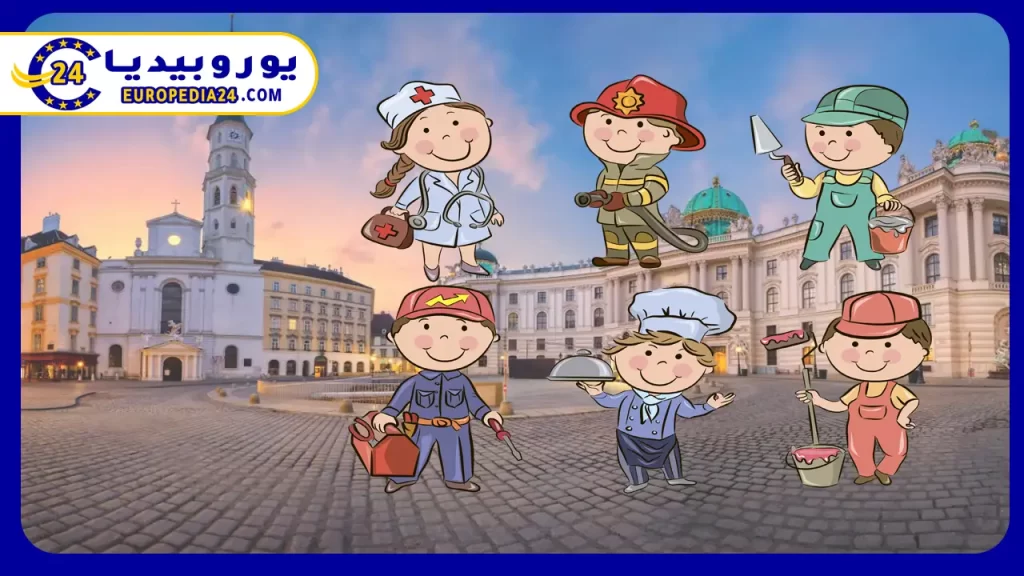
Obtaining a work immigration visa for Austria is considered one of the difficult visas, and you must also meet the minimum required scores and the specific requirements listed in the points and privileges system.
If you have strong skills and experience in these professions, you will find job opportunities quickly after immigrating to Austria, as well as in many countries around the world, since these professions are in high demand and have a promising future.
The most in-demand professions in Austria include the following jobs:
- Nurses, caregivers, elderly care workers, and childcare workers.
- Engineers in various fields (electrical, automotive, mechanical, and other engineering disciplines).
- Welding profession (welder).
- Chefs and cooks.
- Construction workers
- Refrigeration and heating workers.
- Marketing jobs, marketing managers, and sales managers.
- IT and communications managers, and software developers.
The required points can be explained when applying for work immigration to Austria after classifying them into two groups, as follows:
- Work immigration after obtaining a work visa.
- Job seeker visa in Austria.
How to calculate immigration points to Austria
The following table shows the number of points you receive when meeting the specified criteria, which increases your chances of obtaining the visa:
| Availability of job criteria and standards | Number of points |
|---|---|
| Job requirements | Maximum of 30 points |
| University admission | 25 points |
| Work experience in the same field | Maximum of 20 points |
| German language skills | Maximum of 15 points |
| English language skills | Maximum of 10 points |
| Applicants under the age of 30 | 15 points |
| Applicants under the age of 40 | 10 points |
| Holding a technical or vocational qualification | 20 points |
| Studying for 3 years at a university or institute | 30 points |
Points table required for obtaining a job seeker visa in Austria
The points listed in the following table represent what you will receive when the corresponding criteria are met in your profile, increasing your chances of obtaining the visa:
| Eligibility criteria for job search | Number of points |
|---|---|
| You meet the conditions | 40 points |
| Your age does not exceed 35 years | 20 points |
| Your age does not exceed 40 years | 15 points |
| Your age does not exceed 45 years | 10 points |
| Bachelor’s degree | 20 points |
| Bachelor’s degree or Master’s degree obtained in Austria | 10 points |
| Bachelor’s degree in mathematics, basic sciences, computer science, or technology | 30 points |
| PhD holders in mathematics, basic sciences, computer science, or technology | 40 points |
| English and German language skills up to A1 level | 5 points |
| English and German language skills up to A2 level | 10 points |
| Research and patents | 20 points |
| Scientific awards | 20 points |
| Work experience in the same field of study | 2 points for each year of experience |
| 6 months of work experience in Austria | 10 points |
How to immigrate to Austria for work
Immigrating to Austria for work offers many advantages and benefits, especially in terms of the diverse job opportunities available in the country, as the labor market is large and varied.
You can work in Austria in many sectors such as technology, tourism, healthcare, research, arts, and others.
Austria is also a country that strongly protects workers’ rights and provides professional protection and insurance, along with many other benefits. It also regulates minimum wages, working hours, annual leave rights, and more.
You can apply for a work immigration request to Austria through one of the following two methods:
Work immigration to Austria through a job offer (JOB OFFER)
Qualified individuals can obtain a work and residence permit for one year in Austria. The requirements for this type of visa include having a job offer or invitation from an Austrian employer, as well as at least a bachelor’s degree.
The employer is also required to advertise the job for 3 months in Austria and 3 months within the European Union. If no suitable candidate is found, the employer may then apply to hire a qualified foreign worker.
Work immigration to Austria through a job seeker visa
Another way to obtain a work permit in Austria is through a job seeker visa.
This visa is valid for 6 months and requires applicants to meet the required points system. The applicant must score 70 points out of 100 to obtain this type of visa.
After obtaining the visa, the person can stay in Austria and cooperate with the Austrian labor office during the 6-month validity period while searching for job opportunities.
If a suitable job matching their qualifications is found, the person can obtain a work residence permit in Austria through the Red-White-Red Card, which is linked to employment in the country.
This method allows individuals to search for job opportunities and apply for them in Austria, giving them the chance to work and settle in this wonderful country.
It is also important for individuals to consult in detail with the relevant authorities and specialized lawyers in Austrian immigration and labor law to ensure compliance with all legal procedures and requirements.
Advantages of working in Austria
When deciding to immigrate to Austria for work, you gain many benefits, including:
- Diverse job opportunities: Immigration to Austria gives you access to a dynamic and diverse labor market with opportunities across multiple sectors, allowing immigrants to find jobs in various industries.
- Workers’ rights and protection: Austria provides strong labor rights and professional protection, including minimum wage, fair working hours, paid annual leave, health insurance, and other benefits and incentives.
- Advanced infrastructure: Austria has a highly developed infrastructure, including reliable public transportation, high-quality healthcare, respected education systems, and advanced communications, making daily life easier for immigrants.
- High quality of life: Austria is considered one of the countries with the highest quality of life in the world, characterized by its beautiful nature, historic cities, and advanced public facilities.
- Personal and professional development opportunities: When immigrating to Austria, you are guaranteed to benefit from personal and professional development opportunities in Austria, as it offers prestigious education and opportunities for training and professional development.
- Excellent healthcare: Austria provides an excellent healthcare system that ensures healthcare for residents, and migrants can benefit from advanced medical services and comprehensive care provided by Austria.
How to apply for immigration to Austria

Austria does not require an entry visa for citizens of the European Union (EU) and the European Economic Area (EEA), and there is no need to obtain a residence or work permit.
In addition, citizens of Bulgaria and Romania enjoy freedom of migration to Austria for work purposes; however, applicants holding the nationality of these countries must apply for permanent residence within four months of arriving in Austria.
This application is submitted to the local authority in the state or the relevant administrative authority, along with documents proving financial independence and the ability to be self-sufficient.
It is important for applicants to comply with submitting the required documents and proving their ability to meet their financial needs.
After obtaining permanent residence, individuals can benefit from work opportunities and live in Austria permanently, enjoying life in a country known for its natural and cultural beauty.
If you plan to stay in Austria for more than six months and you are not a citizen of the European Economic Area or Switzerland, you will need to obtain a residence permit.
However, if your stay is less than six months, you will not need a residence permit, but you will require an entry visa to Austria.
You must submit the residence permit application in person at the Austrian embassy or consulate in your home country before entering Austria, and you must have a stable and regular source of income to cover living expenses.
It is important to contact the Austrian embassy in your country to obtain accurate information and details about the residence permit application procedures.
The embassy can also provide guidance and assistance in preparing the required documents and information to ensure the application is submitted correctly.
You can apply for immigration to Austria through the official immigration website.
Austria offers online application procedures for certain immigration categories.
This online system allows individuals to fill out forms, submit required documents, and complete the necessary steps to apply for an Austrian immigration visa.
However, it is important to note that requirements and procedures may vary depending on the type of immigration you are applying for, and some categories may not be available for online application.
In such cases, in-person submission at the embassy or Austrian consulate in your country may be required.
Therefore, it is always recommended to verify official sources from the Austrian Ministry of the Interior or the Austrian embassy in your country to obtain accurate and up-to-date information regarding application procedures and required documents for immigration to Austria.
You can visit the official website of the Federal Ministry of the Republic of Austria to apply for immigration online:
Federal Ministry of the Republic of Austria
Required documents for obtaining a Schengen visa and immigrating to Austria:
Applicants for an Austria (Schengen) immigration visa must fully complete the visa application form, sign it at the designated authorities, and prepare the following documents:
- Application form for an Austrian visa.
- Two passport-style photos, recent, with the face clearly visible on a white background.
- A passport valid for at least 3 months beyond the planned date of departure, with at least two blank pages.
- Flight reservations (round trip) or a travel itinerary showing entry and exit dates from the Schengen area.
- Travel health insurance covering medical emergencies, hospital care, and repatriation for medical reasons.
- The insurance must provide coverage of at least €30,000 and be valid across all Schengen countries.
- The insurance should be purchased before visa approval; if the visa is rejected, it can be canceled.
- You must provide proof of accommodation for your planned stay in the Schengen area.
- You must also provide documents proving your civil status, such as a marriage certificate, birth certificates of children, or a death certificate of a spouse (if applicable).
- Proof of sufficient financial means to cover living expenses during the stay in the Schengen area.
Frequently asked questions about immigration to Austria:
Is the Austrian visa easy to obtain?
Yes, following the steps mentioned in this article from Europedia 24 makes immigration to Austria relatively straightforward.
What language is spoken in Austria?
German.
Can I work and study in Austria at the same time?
Yes, international students are allowed to work part-time during their studies in Austria.
Is a German language test required for a study visa in Austria?
A German language test may be required, although some programs may accept students without German proficiency.
Short answer for search intent
The immigration process to Austria or any other country offers a variety of opportunities, and Austria is considered a preferred destination for individuals seeking to improve their quality of life and economic prospects. In practical terms, this guide helps readers understand the topic in Austria and what should be verified before taking action.
How to use this information with confidence
The value is not only the information itself. It is connecting the information to the next practical step: booking, applying, comparing costs, checking a legal rule or verifying an official source.
Checks before making a decision
- Identify the exact legal pathway: study, work, residence, asylum, family or regularization.
- Use the official version of forms and appointment rules before submitting an application.
- Seek qualified advice if the decision affects an existing legal status or pending case.
Official and reliable references
Frequently asked questions
Yes. Many practical details can differ by city, institution, route or application type, so verify the source responsible for your exact situation.
Can I rely on this article alone?
The article helps you understand the context and take a more informed step, but it does not replace official guidance or specialist advice for legal, financial or study decisions.
Editorial note: This content was editorially reviewed on July 11, 2026, with clearer search-intent answers, official references and practical verification points added.
This post is also available in:
 العربية