Car Rental in Switzerland 2026 Guide: Requirements, Prices, and Driving Tips
Renting a car in Switzerland is the magical gateway and the true key to discovering this paradise on earth with complete freedom and without restrictions.
Although Switzerland’s public transportation network is exceptionally efficient and precise, driving yourself through the towering Alpine peaks and turquoise lakes offers a once-in-a-lifetime experience, allowing you to stop at hidden villages and picturesque valleys that trains cannot reach.
In this guide, we’ll explain everything you need to know to rent a car safely and at the lowest possible cost, while avoiding hidden fees and Switzerland’s strict traffic penalties.
Why Is Renting a Car in Switzerland the Best Choice for Your Trip?
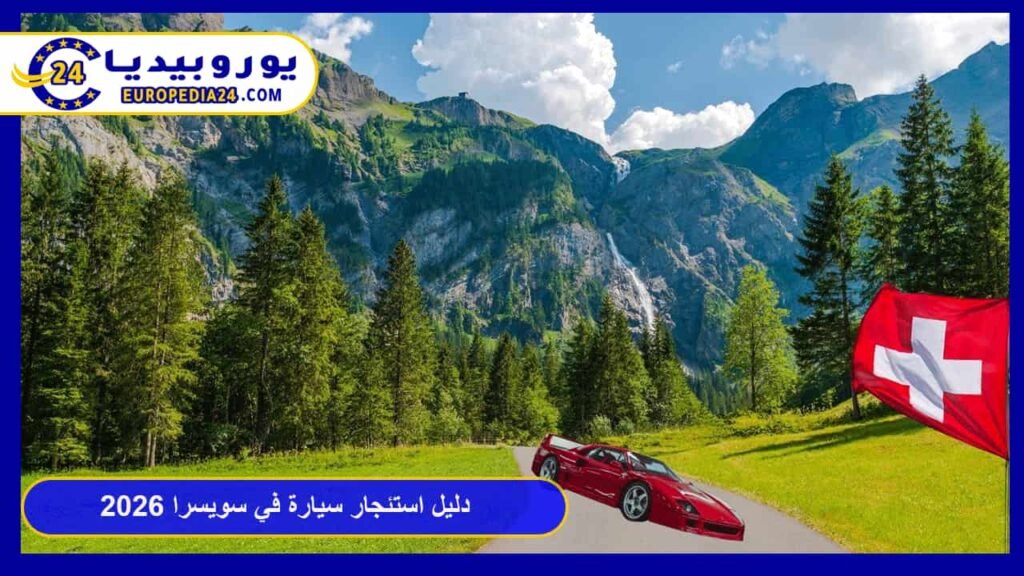
Traveling to Switzerland means embracing unspoiled nature and escaping the hustle and bustle of city life. Although Switzerland’s railway network is world-renowned for its efficiency, there are breathtaking places and hidden landscapes that can only truly be discovered by car.
Driving in Switzerland gives you complete flexibility to plan your own itinerary without being tied to public transportation schedules. You can stop whenever you like to photograph a mountain waterfall or a peaceful lake in the heart of the countryside.
In addition to the unforgettable scenery, renting a car can be much more economical if you’re traveling with family or friends. The cost of renting a car in Switzerland and fueling it is often significantly lower than purchasing multiple train tickets for everyone.
A rental car also gives you the freedom to stay in quiet countryside hotels and mountain chalets that are more affordable than accommodations in major city centers.
Requirements and Documents for Renting a Car in Switzerland for Arab Travelers
To ensure a smooth car rental process at the airport or in the city, you must prepare several essential documents and comply with strict rental regulations.
Missing any of these requirements could result in your reservation being canceled and your money being lost, so make sure everything is ready before you travel.
- National and International Driver’s Licenses: You must carry your original valid national driver’s license (printed in the Latin alphabet) together with an International Driving Permit (IDP). The IDP is considered essential and may be officially requested by Swiss police during traffic stops. Your national license alone is generally not sufficient.
- 12Credit Card: The credit card must be in the name of the primary driver, with the name embossed on the card. It should also have sufficient available credit because the rental company will place a security deposit, typically between CHF 1,000 and CHF 2,000, until the vehicle is returned in good condition. Prepaid cards and most debit cards are generally not accepted by rental companies.
- Minimum Driving Age: The legal driving age in Switzerland is 18, but most rental companies require drivers to be at least 21 years old and to have held their driver’s license for at least one year. Drivers under the age of 25 are usually charged an additional daily young driver surcharge.
Swiss Motorway Vignette and Road Regulations
Driving in Switzerland is enjoyable, but it requires a thorough understanding of local traffic laws to avoid the country’s well-known and often expensive fines.
Swiss traffic regulations are strictly enforced, with a strong emphasis on road safety. Here are some of the most important rules to remember.
Swiss Motorway Vignette
To drive on Swiss motorways, you must pay a CHF 40 annual motorway tax, which is verified by a motorway vignette attached to the vehicle’s windshield.
If you are renting a car in Switzerland, the vehicle will normally already include the motorway vignette at no extra charge.
However, if you rent a car in a neighboring country such as Germany or France and drive it into Switzerland, you must purchase the vignette at the border or at a fuel station and display it on the windshield. Failure to do so may result in a CHF 200 fine.
Strict Speed Limit Enforcement
Switzerland is filled with both hidden and fixed speed cameras, even inside mountain tunnels. The maximum speed limit is 120 km/h on motorways, 80 km/h on open roads outside urban areas, and typically 30–50 km/h in residential zones.
Keep in mind that exceeding the speed limit by only a few kilometers per hour can result in fines amounting to hundreds of Swiss francs.
Parking Regulations
Parking in Switzerland is highly organized and color-coded.
- Blue Zones: Free parking for a limited period (usually one to two hours), but you must display a blue parking disc indicating your arrival time. This disc is usually found in the glove compartment of your rental car.
- White Zones: Paid parking areas that require payment at nearby parking meters or self-service machines. You must not exceed the time you have paid for.
How to Choose the Right Car Insurance to Avoid Hidden Fees in Switzerland
Insurance is the most important—and often the most confusing—part of renting a car in Switzerland. Some rental companies may try to sell you expensive additional coverage when you pick up the vehicle, so understanding the available options can help you avoid unnecessary costs.
- Collision Damage Waiver (CDW): This basic coverage is typically included in the standard rental price. However, it usually comes with an excess (deductible), which is the maximum amount you would have to pay out of pocket if the vehicle is damaged. The deductible commonly ranges between CHF 1,000 and CHF 2,500.
- Zero Excess / Full Coverage Insurance: This comprehensive option eliminates your financial liability for vehicle damage, meaning you would not have to pay the deductible if an accident occurs. It is highly recommended to purchase this coverage online before your trip, where it is often cheaper. You should also check whether your premium credit card includes international rental car insurance, as this may provide equivalent coverage at no additional cost.
Smart Guide to Choosing the Right Car and the Best Booking Location in Switzerland
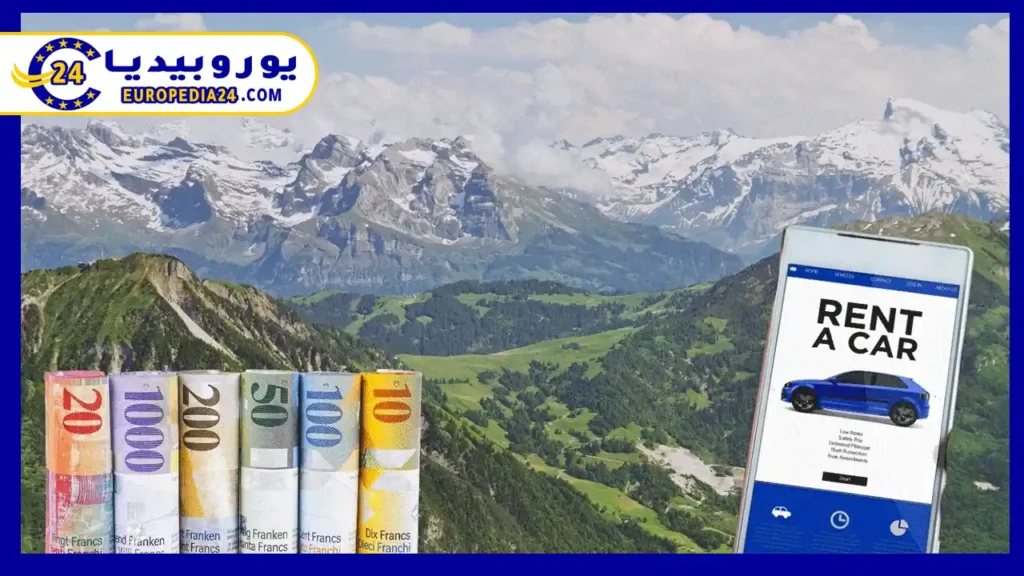
Now that you have prepared your documents and fully understood the details of rental insurance, it is time to move on to the actual booking process: how much will this experience cost, and where should you start your reservation?
We provide you with a clear financial and practical comparison of the car categories available in the Swiss market, along with guidance to the most reliable and secure international booking platforms based on the type of vehicle that suits your needs and budget:
| Car Category | Average daily price (CHF) | Best suited for | Recommended booking platforms |
| Economy (Compact) | 40 – 65 | Ideal for couples, quick trips, and easy parking during the summer. | Discover Cars & Auto Europe (known for offering some of the best discounts and deals on compact and economy cars). |
| Family (Spacious/SUV) | 80 – 130 | Excellent for families, groups, and travelers who need extra luggage space. | Rentalcars (offers a wide range of SUVs and spacious family vehicles from leading international rental companies). |
| Electric Vehicle (EV) | 60 – 90 | An excellent choice for reducing fuel costs, as charging stations are widely available throughout Switzerland. | Hertz & Sixt (operate some of the newest and largest fleets of premium electric vehicles in Europe). |
| Petrol/Diesel per liter | 1.80 – 2.00 | The average cost of filling a full fuel tank ranges between CHF 70 and CHF 100. | You can check updated fuel prices using the TCS app or at local fuel stations. |
Golden Tips to Save Money When Renting a Car in Switzerland
Traveling around Switzerland does not necessarily mean spending a fortune. Here are some professional and practical tips that can help you save hundreds of Swiss francs when renting a car and ensure you get the best possible deal.
- Avoid picking up the car from major airports whenever possible: Rental companies charge additional fees known as “premium location fees”, which range between 15% and 20% when picking up the car from Geneva Airport or Zurich Airport. If your schedule allows, you can collect the car from company branches inside cities to avoid these fees.
- Early booking is the secret to saving money: Car prices increase dramatically as peak travel seasons approach (summer and winter ski seasons), and booking 3 to 6 months before your trip ensures that you get the best car category at a price that is approximately half the cost of a last-minute booking.
- Pay attention to the fuel policy: Always choose the “full to full” option, receive the car with a full fuel tank, and return it with a full tank. You should also avoid the option of purchasing a prepaid fuel tank from the rental company because they sell it at much higher prices than external fuel stations.
- Crossing neighboring countries: If you plan to visit Switzerland’s neighboring countries by car, make sure to inform the rental company in advance. Driving from Switzerland to France or Italy is allowed and free of charge with most companies, but it is essential to have it recorded in the contract to ensure that insurance coverage remains valid outside Swiss borders.
Frequently Asked Questions About Renting a Car in Switzerland
Can I drive in Switzerland with a Saudi license or my Arab country’s driving license?
Yes, you can drive with your local license as long as it is valid and written in Latin letters (or accompanied by an approved translation), but rental companies and Swiss police strictly require the International Driving Permit (IDP) in addition to your original license.
Is driving in Switzerland difficult or dangerous?
Driving in Switzerland is very safe and easy thanks to the high quality of roads, smooth asphalt, and clear road signs. The only challenges are narrow mountain curves and snowy conditions during winter. Therefore, it is always recommended to rent an automatic car with strong performance and drive very carefully in mountainous areas.
What type of fuel is used in Switzerland and how do you refuel?
Two main types are available at fuel stations: petrol and diesel. Make sure to check your vehicle’s fuel type from the label inside the fuel cap, as most stations in Switzerland operate on a self-service basis. You fill the fuel yourself and then go to the cashier to pay in cash or by card while providing the pump number.
Do I need a 4WD vehicle in Switzerland?
During summer, you do not need a four-wheel-drive vehicle at all, as small economy cars are more than sufficient. However, if your trip takes place in winter and you plan to travel to high snowy mountain resorts, 4WD vehicles equipped with winter tires and snow chains become essential for your safety.
Now that you know the rules for renting a car in Switzerland, do not let hesitation delay your plans. Start comparing prices through reliable websites, and always remember that early booking is the key to saving money and enjoying a comfortable trip. If you have any other questions about planning your travel route or expected budget, leave us a comment.
Conclusion
The process of renting a car in Switzerland can be summarized into three main factors to ensure an enjoyable and obstacle-free trip: preparing the mandatory legal documents (the international driving permit and a credit card in the driver’s name), understanding Switzerland’s strict road regulations, purchasing the motorway vignette (Vignette), and following strict speed limits. After that, choosing comprehensive insurance and the right booking location helps save money. Early and smart planning completely protects you from additional costs.
Who Can Benefit from This Guide?
This content is specifically designed for Arab travelers (whether families, groups, or honeymoon couples) who are planning to explore Switzerland by car. We have prepared practical checkpoints and links to official sources to help you transform theoretical information into a real travel plan, allowing you to avoid surprises, traffic fines, or hidden fees at the rental counter.
Before Relying on the Information
- Driver’s name and credit card: Do not use a credit card under the name of anyone other than the main driver listed in the rental agreement and driving license. This common mistake will result in the immediate cancellation of your reservation upon arrival and the loss of the full booking amount.
- Fuel policy and border crossing: Make sure to review the rental agreement to understand the fuel policy. We recommend choosing Full to Full, while also ensuring that your intention to cross borders by car into neighboring countries (such as France or Italy) is recorded in the rental agreement to guarantee that insurance coverage remains valid outside Switzerland.
- Motorway vignette: If you pick up the car from Germany or France to enter Switzerland, do not cross the border before purchasing the Swiss motorway vignette (CHF 40) and placing it on the windshield. Border monitoring cameras detect violating vehicles and automatically issue very high fines.
Official Sources and Reliable References
- The official website of the Swiss tourism office MySwitzerland
- Swiss traffic police portal and road information Federal Roads Office (FEDRO)
Frequently Asked Questions
Do car rental requirements and conditions vary depending on the seasons in Switzerland?
Yes, winter periods and snowy mountain villages require rental companies to equip vehicles with special winter tires and snow chains, which may add a slight additional cost to the daily rental price. In contrast, during summer, cars are equipped with standard tires included free of charge.
Does this article replace official sources?
No, this guide summarizes practical travel experiences and golden money-saving tips. However, it is always recommended to review the specific conditions of the rental company you choose and the official Swiss tourism website immediately before traveling to check for any updates regarding traffic regulations, fines, or taxes.
Editorial Note: This content was fully reviewed and updated on July 16, 2026, to add official sources and practical checkpoints that enhance trust and expertise.
This post is also available in:
 العربية