Learn About Spain’s Tourist Map, Borders, and Major Cities
Spain is one of the most beautiful countries, as it contains many amazing tourist attractions. This is clearly shown through the map of Spain, which helps you learn about the country’s borders, most important cities, and famous historical landmarks.
Therefore, if you want to plan a visit to Spain, you should refer to the map to easily identify the places you want to visit, as well as understand the country’s geography.
Through Europedia24, we will provide you with Spain’s borders, its remarkable tourist attractions, and the most important cities you can visit to enjoy the details of its rich and unique historical heritage.
Map of Spain and Neighboring Countries
Spain is surrounded by many countries from different directions, as we can see on the map of Spain. It is bordered from the south and east entirely by the Mediterranean Sea, except for a very small land border with Gibraltar.
If we look at the north on the map of Spain, we will find France, Andorra, and the Bay of Biscay. To the west, it is bordered by the Atlantic Ocean and Portugal.
Spain covers an area of approximately 504,030 square kilometers, making it the largest country in Western Europe after France. It is also known for its strong relationship with France and Portugal.
The accession of Spain and Portugal to the European Union helped reduce periodic trade tensions by placing these relations within the framework of the European Union.
As for Britain, its relationship with Spain is very good, despite the ongoing Gibraltar dispute. Spain also maintains a good relationship with Portugal, especially after resolving historical disputes recently regarding the Savage Islands in the Atlantic Ocean.
On the map of Spain, we can see that the country is divided into 17 autonomous regions, which are further divided into 50 provinces, in addition to two autonomous cities in Africa: Melilla and Ceuta.
Spain is known for its thriving economy, ranking ninth globally. The main economic sectors in the country include agriculture, mining, shipbuilding, fishing, and tourism in general due to the presence of many distinctive historical and tourist attractions.
Read also – Learn about the map of Germany, city names, and borders
Map of Spain and the Most Important Cities in the Country
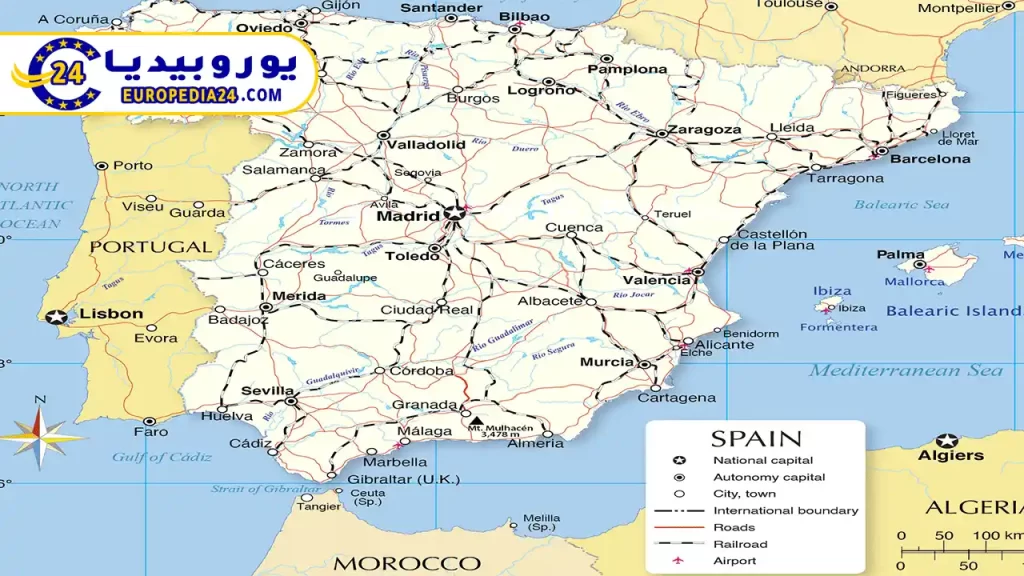
Spain includes many regions that operate under autonomous governance, meaning they have their own governments, unique systems, and sometimes different languages from other regions of the country.
Around 15 regions are located on the mainland, in addition to the Balearic Islands and the Canary Islands, bringing the total to approximately 17 regions. The cities of Spain include the following:
- Andalusia with the provinces: “Almería, Cádiz, Córdoba, Huelva, Jaén, Granada, Málaga, and Seville.”
- Aragon with the provinces: “Huesca, Zaragoza, and Teruel.”
- Asturias Green is one of the most beautiful regions located in northern Spain.
- The Balearic Islands with the islands: “Formentera, Ibiza, Salou, Mallorca, Marbella, and Menorca.”
- The Basque Country with the provinces: “Biscay, Gipuzkoa, and Álava.”
- The Canary Islands, which include some of the best tourist resorts in Spain.
- Cantabria, one of the most attractive regions for visitors in northern Spain.
- Castile and León with the provinces: “Ávila, León, Salamanca, Soria, Valladolid, and Zamora.”
- Catalonia with the provinces: “Barcelona, Girona, and Lleida.”
- Alicante, which enjoys widespread popularity in southern Spain.
- Extremadura with the provinces: “Cáceres and Badajoz.”
- Galicia with the provinces: “A Coruña, Ourense, Lugo, and Pontevedra.”
- Madrid City, the capital of Spain and one of the most important cities in the country.
- Murcia, a small region on the southeastern coast.
- Navarra, the region where the Ebro and Pyrenean rivers flow.
- Valencia, the third-largest city in Spain, in addition to the provinces: “Alicante and Castellón.”
Read also – Learn about the map of Turkey and neighboring countries
Map of Spain and the Rivers Flowing Through the Country
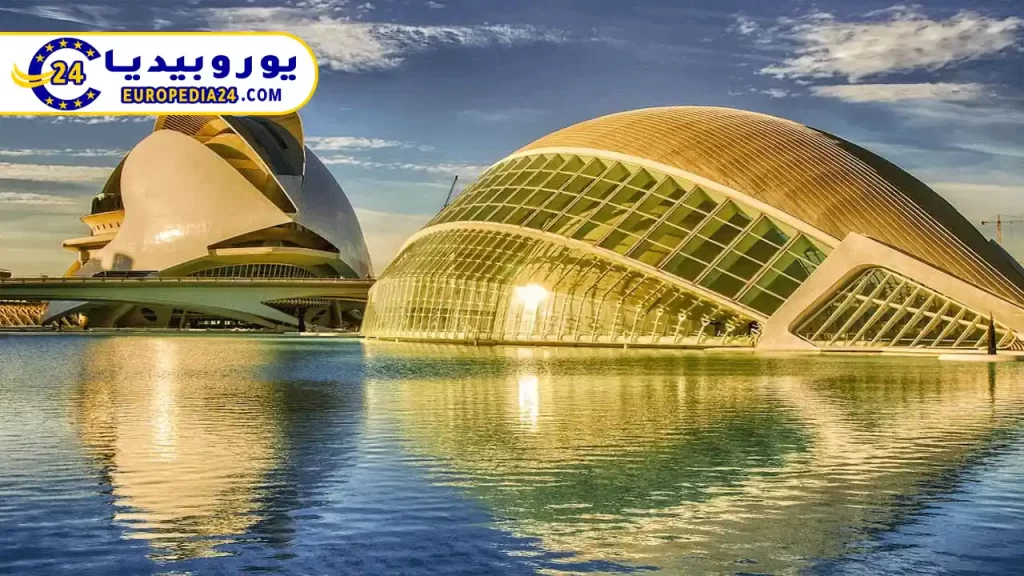
Spain contains five major rivers within the country, as shown on the map of Spain. Four major rivers flow south and west before reaching the Atlantic Ocean: “Tagus, Douro, Guadiana, and Guadalquivir.”
There is also the Ebro River, which has an outlet in Tarragona on the Mediterranean Sea. These rivers are as follows:
River Tajo or Tagus
The River Tajo, also known as the Tagus River, is one of the most famous rivers in Spain. It begins in the mountains, specifically east of Madrid, and passes through Teruel and Toledo toward central Spain before crossing the border between Spain and Portugal, where it flows into the sea in Lisbon.
You can also learn more about the steps to obtain permanent residence in Spain.
The River Tajo is considered a major river, as its waters flow through steep rocky valleys. Therefore, this area is not suitable for construction at all due to erosion, but it contains many reservoirs used for generating hydroelectric power.
Ebro River
The Ebro River is the most powerful river in Spain in terms of water flow, but it is not the longest. The river originates in mainland Spain, starting from Pico de los Tres Mares in Cantabria, and flows until it reaches the Mediterranean Sea in Tarragona.
The Ebro Delta covers a large area of up to 320 square kilometers and is considered one of the largest wetlands in Europe. It is mainly used for growing citrus fruits and vegetables, as well as rice cultivation in some areas.
Guadiana River
The Guadiana River is one of the most famous rivers in Spain, as shown on the map of Spain. It supplies the Andalusian valley with water and contributes to creating many fertile agricultural lands. It is also known as the Great River or the Great Valley.
The river irrigates Spain’s fertile lands, which are used for growing olives, grapes, fruits, and other vegetables.
Douro River
The Douro River flows from Soria in north-central Spain to Portugal, passing through the northern Meseta and the city of Zamora. It supplies the agricultural region known as Ribera del Duero, which is famous for grape cultivation.
Also read – Explore the Tourist Map of Austria
Tourist Map of Spain
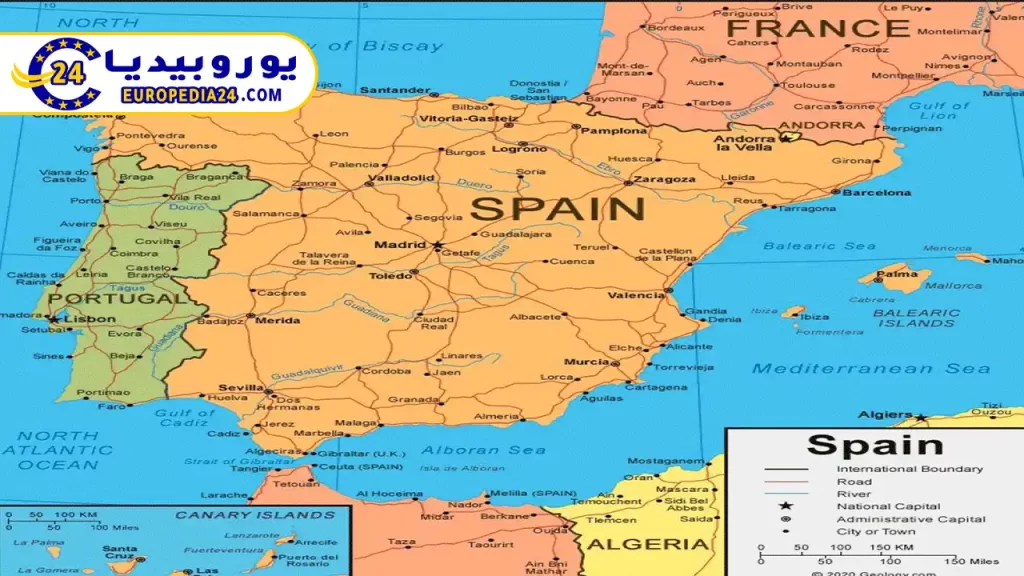
Spain contains many famous tourist attractions and ancient historical sites with a rich heritage that attract many visitors throughout the year from all over the world. The most important of these attractions include the following:
The Most Famous Tourist Places in Madrid
Madrid is considered one of the most beautiful cities in Spain, as it contains many historical treasures that are significantly different from their counterparts in Europe in general, in addition to palaces, museums, restaurants, and more.
Among the most important attractions are Warner Bros. Park Madrid, which is located in the south and is considered one of the most famous tourist attractions, especially suitable for family gatherings.
You can also visit the Royal Palace of Madrid by enjoying a tour inside the palace and its gardens, as well as visiting the military museum located inside the palace. In addition, you can visit Plaza Mayor Madrid, also known as the Main Square.
Madrid also contains many other historic museums, including the Museo del Prado, located in the city center, as well as the Reina Sofía Museum.
The Best Tourist Attractions in Barcelona
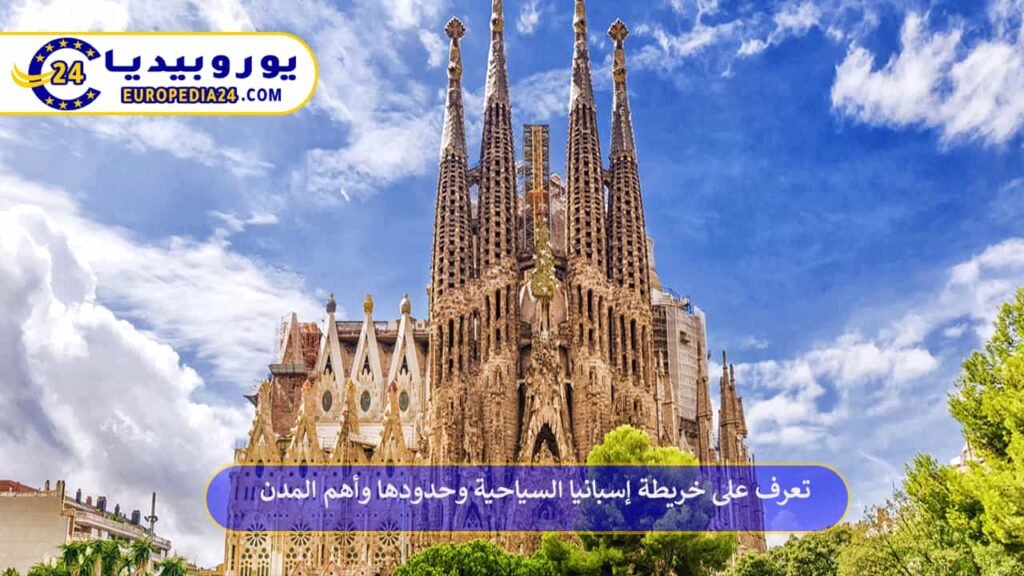
Barcelona enjoys the presence of many distinctive tourist attractions, including gardens and vast green spaces. Among the best tourist places in the city are Barcelona Cathedral, Catalonia Square, and the Sagrada Família Church.
Barcelona also includes some of the best parks in the country, including Park Güell, Barcelona Zoo, and the Barcelona Botanical Garden.
The Best Tourist Places in Marbella
Marbella contains many gardens with stunning natural landscapes, and the city is also famous for its excellent climate throughout the year.
The most beautiful tourist attractions in Marbella, according to the map of Spain, include the Old Town or Casco Antiguo, which is known for its Andalusian heritage, in addition to Plaza de los Naranjos.
Read also – Learn about the steps to obtain Spanish citizenship
Frequently Asked Questions About the Map of Spain
What Is the Official Language of Spain?
Spanish (Castilian) is the country’s primary and official language.
What was Spain called in ancient times?
Spain was historically known as Hispania, which was the name given to it by the Romans, specifically referring to the entire Iberian Peninsula.
Short Answer Based on Search Intent
Spain is one of the most beautiful countries, as it contains many wonderful tourist attractions. This is what the map of Spain illustrates, helping you identify the country’s borders, major cities, and most famous historical landmarks. In short: This guide helps you understand the topic in Spain while highlighting what you should verify before making a practical decision.
How do you use this information with confidence?
The value here is not only in presenting information, but in linking it to an actionable step: Do you need to make a reservation, submit an application, compare costs, review a legal requirement, or verify an official authority? Therefore, we have added verification points and direct sources that reduce the chances of errors.
Verification points before making a decision
- Review the official website of the place or city to know the opening hours, prices, and seasonal changes.
- Compare the location with nearby transportation and accommodation options so that the visit cost does not exceed the expected budget.
- Use visitor reviews as a helpful reference, but confirm bookings and policies through official channels.
Official Sources and Reliable References
Frequently Asked Questions
Do the details differ within Spain from one city or region to another?
Yes, many practical details may differ depending on the city, institution, or type of application, so you should refer to the authority responsible for your specific case.
Can the article be relied on alone?
The article helps you understand the overall picture and make a more informed step, but it does not replace official sources or specialized consultation if the decision is legal, financial, or academic.
Editorial note: This content was editorially reviewed on July 11, 2026, to add a clearer answer to the researcher’s intent, official sources, and practical verification points that enhance trust and expertise.
This post is also available in:
 العربية