Guide to Opening a Bank Account in Germany: Types and Best Banks in Detail
Without having a local bank account, you will not be able to receive your monthly salary, pay rent and additional living expenses, or even subscribe to essential internet and communication services that you need in your daily life there.
Therefore, we will explain in detail how to open a bank account in Germany; starting from the available account types, the key differences between traditional and digital banks, all the way to the required documents and papers needed to activate your account safely and at the lowest possible cost.
Requirements for Opening a Bank Account in Germany
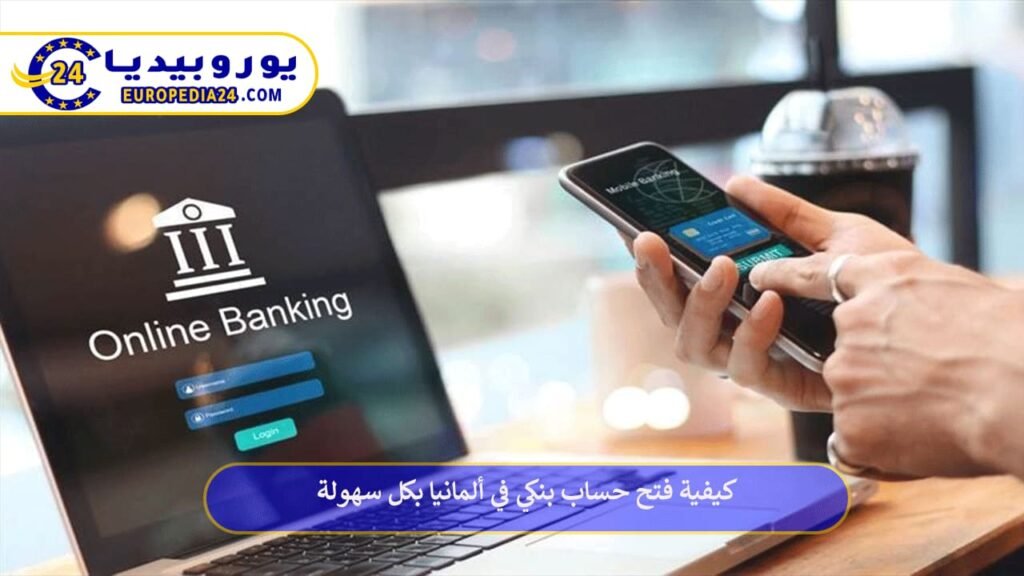
To understand how to open a bank account in Germany, you must meet a set of basic requirements that every applicant must fulfill. These requirements include:
- The applicant must be over 18 years old.
- Children aged 7 and above can open a basic account, but parental consent is required.
- A valid personal identification document, such as a passport or a tolerated residence permit (Duldung).
- A residential address in Germany for receiving bank correspondence.
- If you do not have permanent residence in Germany, you may use the address of a friend or a counseling center.
Documents and papers required to open a bank account in Germany
German financial procedures are subject to strict verification. To successfully open a bank account in Germany, you need to prepare the following documents:
- Original passport: Must be valid and carry a legal residence visa.
- Official residence registration certificate (Anmeldung): An essential document proving your actual address in Germany (digital banks such as N26 may temporarily waive this requirement and only require your physical presence within Germany).
- German tax identification number (Steuer-ID): Required by law to prevent tax evasion (you may provide it to the bank within a few months after opening the account if you have not yet received it by mail).
- Proof of status (if applicable): Your employment contract if you are an employee, or your university enrollment certificate if you are a student to benefit from a free account.
Read also – The best way to open a bank account in Britain



Types of bank accounts in Germany: Which one should you choose?
When you go to the bank, you should request the type of account that matches your legal and financial status in Germany. The German banking sector is mainly divided into three types:
Individual current account Girokonto
This is the basic and most common account for everyone living in Germany. It is used for receiving salaries, paying bills, and making daily transfers, and it comes with a debit card for purchases and cash withdrawals.
The individual current account is suitable for a specific group of people, including employees, freelancers, and holders of job-seeker visas.
Blocked bank account Sperrkonto
A blocked bank account is a special account required by the German authorities as a basic condition for issuing visas to international students and job seekers to prove their financial capability.
For the year 2026, German regulations require freezing an amount of 1,091 euros per month in this account, and the bank releases this amount gradually to you as a fixed monthly payment once you arrive in Germany.
Student current account Studentenkonto
This is a regular current account (Girokonto), but with exceptional benefits and a complete exemption from administrative and monthly maintenance fees.
The student current account is suitable for a specific category of people: students officially enrolled in German universities and usually under the age of 28.
Comparison between traditional and digital banks in Germany
The German banking sector is divided into two systems, each with its own advantages and disadvantages that affect your daily banking experience:
| Aspect of comparison | Traditional banks | Digital banks |
| Definition | These are long-established banks that have real branches on the streets, independent ATMs, and employees you can speak with face to face. | They are modern banks that operate entirely through smartphone applications and websites, without any physical branches. |
| Most popular examples | Sparkasse, the most widespread bank in every city and village, Deutsche Bank, Commerzbank | N26 (the most famous digital bank in Europe), DKB, Comdirect |
| Advantages | Traditional security, easy cash deposit services, and direct customer support through branches. | Usually completely free of charge (without monthly fees), accounts can be opened within minutes from home, and the application is fully available in English. |
| Disadvantages | They charge monthly account maintenance fees (ranging from 3 to 8 euros), and most services and employees communicate only in German. | Difficulty depositing cash, and customer support is available only through chat or phone calls. |
How to open a bank account in Germany
Anyone inside Germany can open their own bank account by following the steps for opening a bank account in Germany, whether through banks with many branches across the country or directly through online banking services.
How to open a bank account in Germany at a bank branch
If you want to open an account at a bank near your place of residence, you can go to one of the nearby bank branches without an appointment, where a staff member will help you fill out the application for opening a bank account.
You must provide personal identification such as a valid passport or a residence permit, among other documents, so that the employee can verify the identity of the account holder.
How to open a bank account in Germany online
By using this method, you can open an account with a direct bank through the internet. To complete this process, you must fill out the account opening application, as these forms are available on the website of the bank you intend to open an account with.
After completing the required information, you must submit the application and wait for confirmation from the bank, which will be sent to you via email. After about 10 days, you should receive a response regarding whether your application has been accepted or not.
To verify the applicant’s identity, an appointment will be scheduled and sent to you via email so you can bring the required documents.
Another method of identity verification is a video call, during which you present your ID to the camera and answer some questions related to your personal information.
How to open a bank account in Germany for non-residents
Understanding how to open a bank account in Germany for non-residents is important because it offers several advantages, including:
- If you are a student, you will need a bank account to pay tuition fees.
- Paying for study materials required during your education in Germany.
- Saving money earned from business activities.
- Paying for travel tickets online.
How to activate a bank account for non-residents
You must verify your identity when applying to activate a non-resident bank account by visiting the bank and meeting the responsible employee, or by confirming your identity through a video call.
The account is usually activated within a week or less after approval and confirmation. You will receive a message on your phone containing a PIN code for your account to complete the activation process.
Read also – How to open a bank account in the Netherlands
Costs of opening a bank account in Germany
The cost of opening a bank account in Germany varies from one bank to another, as there is no fixed legal fee. However, the basic account fees must not be higher than the fees of other account types.
Additionally, no bank is allowed to charge more for basic account services than other banks.
The annual cost of opening a bank account in Germany generally ranges between 50 and 150 euros. This cost consists of the fees charged by the bank for account management, commonly known as account maintenance fees or basic service fees.
Additional fees may also apply for certain services provided by banks, such as making transfers or printing account statements.
Of course, you can obtain all this detailed information from the price list provided by the bank to applicants when going through the process of how to open a bank account in Germany.
Reasons for a bank rejecting a basic account application

A bank has the right to reject an application for opening a bank account in Germany, even if all the steps for how to open a bank account in Germany have been followed. This may happen for several reasons, including:
- If the applicant already has another active bank account in Germany.
- If the applicant already holds a basic account with the same bank and has not paid the required fees.
- If the applicant has used a basic account for illegal activities, such as money laundering
- if opening the account would otherwise violate the law.
After receiving a rejection from the bank, you can contact the Federal Financial Supervisory Authority to submit an online administrative review request so that the authority can re-evaluate the rejected application. BaFin
However, if the issue is excessively high fees for opening a bank account in Germany, you can also contact the authority to submit a complaint form, which can be printed and sent by post.
How to withdraw money from your German bank account
You can easily withdraw money from your account using your bank card and PIN code, which you receive after completing the steps of how to open a bank account in Germany.
It is important to know that the best way to withdraw cash is through your bank’s own ATMs, because using another bank’s ATM may require additional fees, which can reach up to 6 euros in some cases.
Sparkasse is one of the most popular and well-known banks in Germany. It also has the largest ATM network compared to other banks and offers a wide range of services. You can find the nearest ATM using the Cash Group website: cashgroup.de
Read also – Key steps to open a bank account in Sweden
How to check your bank account balance in Germany
If you are someone who makes many financial transactions, you should regularly check the funds in your account, both income and expenses, by using online banking services on your bank’s website.
You are entitled to use this service after completing the procedures for opening a bank account in Germany.
The bank also regularly sends a bank statement to the account holder’s email, which includes all financial transactions carried out during the previous period.
If any incorrect payments are detected in the statement, you should immediately contact the bank to review your account statement.
Security procedures in case of a bank account breach in Germany
If the bank account holder in Germany experiences a hack or loses their bank card, they must immediately contact the bank via the phone number 0049116166 to block the card and prevent anyone from stealing their funds.
This number is valid for use with most banks in Germany. You can also verify the correct number through the sperr-notruf.de website or by contacting your bank directly.
The bank will then send you a new card along with a PIN code free of charge, without needing to visit the bank again or repeat the process of opening a bank account in Germany, since your account already exists.
Bank transfers between accounts within Germany

After learning how to open a bank account in Germany, you are now a bank account holder. Therefore, you need to understand how bank transfers between accounts work. If the transfer is within Germany, it is completed on the same day, while transfers within Europe usually take between one and two days.
Bank transfers are not free at all banks, although some banks may offer them for free. However, in general, a fee is charged for each transfer between banks.
You can also make bank transfers inside a bank branch by using the official transfer form, which can be obtained for free. You must fill in all required information, including:
- The full name of the recipient.
- Recipient’s IBAN (International Bank Account Number).
- Recipient’s bank BIC/SWIFT code.
- The amount of money to be transferred.
- Transfer details or reference information.
- The sender’s account number.
- The transfer date.
- Signature.
After completing the form, it is placed in the bank’s mailbox or handed directly to a bank employee.
If you want to make bank transfers between banks using online services, you must fill out the digital form available on the bank’s website and enter all required personal details, along with the code that will be sent to your email.
Transferring money to a bank account outside Europe
If you want to transfer money to an account outside Europe, you must first follow the steps of opening a bank account in Germany, and then proceed with the transfer process.
Please note that you will incur additional fees for this type of transfer, which may take several days. To complete the transfer, you must specify the following:
- The amount and currency you want to transfer.
- Recipient’s name.
- Recipient’s IBAN (International Bank Account Number).
- Recipient’s bank BIC/SWIFT code.
How to switch to another bank in Germany
It is important to know that you can change your bank at any time under German law. The old and new banks work together to help you switch accounts through what is known as the account switching service. This applies only to banks within Germany and is usually free of charge.
If you want to switch, you must first follow the steps of opening a bank account in Germany with the new bank, then submit a request for assistance to transfer your account from the old bank to the new one using a standard form provided by the bank.
To ensure continued access to your money during the switch, you should only close your old account at least two months after opening the new one, so that incoming transfers and payments can still be processed properly.
Read also – How to open a bank account in France
Credit cards issued by banks in Germany
After completing the process of opening a bank account in Germany, you can obtain a credit card. A credit card is a financial card that allows you to make payments and withdraw money anywhere in the world. There are several types of credit cards, including:
- Credit Card: The credit card provider deducts a fixed amount from your account at the end of the month. However, it does not deduct the full amount immediately. If you exceed the credit limit within one month, you will be required to pay interest.
- Debit card: In this case, no interest is accumulated, as the card provider deducts all expenses for a single month directly from the account.
- Debit Card: No interest is charged at all, as the provider deducts expenses individually and directly from the account.
How your bank account helps you achieve stability in Germany
Successfully opening a bank account in Germany is the backbone of your financial life. Once your account is activated, you can directly link it to your German tax ID (Steuer-ID) and submit it to your company’s HR department to receive your first salary.
Having a bank account also allows you to obtain a SCHUFA credit report, which strengthens your rental application when searching for accommodation in Germany and securing the official registration of residence document.
This financial stability will give you peace of mind, allowing you to fully focus on improving your CV according to German standards, refining your cover letter for jobs in Germany, and start applying for major opportunities through the best job search platforms in Germany to secure your long-term career growth.
Frequently asked questions about how to open a bank account in Germany
What is the best bank in Germany?
Deutsche Bank is one of the best banks in Germany, offering a wide range of services to customers and having many branches across the country.
Can money be transferred from an account to another outside Germany?
Yes, money can be transferred from an account to one outside Europe, but additional fees will apply to complete the transaction.
Can I open a bank account in Germany before traveling there?
Yes, this is only possible for a blocked account (Sperrkonto) for students or for the Opportunity Card. You can open it online through approved providers such as Expatrio or Fintiba and transfer money from your home country. However, a regular current account (Girokonto) can only be opened after arriving in Germany.
What is the Girocard or EC card commonly used in Germany?
It is the local German debit card. It is different from Visa or Mastercard. You will notice that some stores and small bakeries in Germany only accept Girocard payments. Therefore, when choosing a traditional bank, it is recommended to ensure you receive this card to make your daily transactions easier.
Do you prefer the classic security of traditional banks or the flexibility of smart digital apps? Share in the comments the type of bank you are thinking of using, and we will immediately tell you its fees and advantages!
Short answer for search intent
Whether you are a new arrival for studying, have already started your job, or have recently arrived to search for professional opportunities, one of the first legal and financial steps you must take is learning how to open a bank account in Germany. In practical terms: start with admission requirements, language rules and funding, then verify the exact university or program page before paying fees or planning travel.
Who this guide is for
This content is written for international and Arab students comparing study options, costs and admission routes in Germany. The added checkpoints help readers turn the information into a safer practical decision instead of relying on a general or outdated summary.
Before relying on the information
- Compare the article with the university or DAAD page because requirements vary by program and state.
- Check semester fees, health insurance, housing and proof-of-funds rules instead of relying on a single average cost.
- Track deadlines and required documents in one list so an application window is not missed.
Official and reliable references
Frequently asked questions
Can details differ from one German state to another?
Yes. For study, work, housing and local services, details may differ by state, city or authority. Always verify the responsible source for the place you are targeting.
Does this article replace official guidance?
No. The article explains the context and gives practical checkpoints, but it does not replace official websites or qualified advice when a legal or financial decision is involved.
Editorial note: This content was editorially reviewed on July 11, 2026, with clearer search-intent answers, official references and practical verification points added.
This post is also available in:
 العربية
  简体中文
简体中文  Hrvatski
  Nederlands
  Suomi
Suomi  Français
  Deutsch
  Íslenska
  Gaeilge
  Italiano
  日本語
日本語  한국어
한국어  Polski
  Română
  Русский
  Español
  Türkçe