Job Interview in Germany: The Essential Questions and Model Answers Guide for 2026
Employers and hiring managers at German companies do not rely solely on the academic qualifications listed in your résumé. Instead, they primarily focus on assessing how well you fit the disciplined German work culture, which places great value on commitment, reliability, and clear communication.
In this guide, we will explain in detail and through practical steps everything that happens behind the scenes of German job interviews—whether conducted online or face-to-face. We will also cover the most common interview questions and the best ways to answer them using the smart German approach, helping you secure a job offer with confidence and prepare to explore the easiest ways to immigrate to Germany and begin your visa process.
Types of Job Interviews in Germany in 2026 and the Technical Process Behind Them
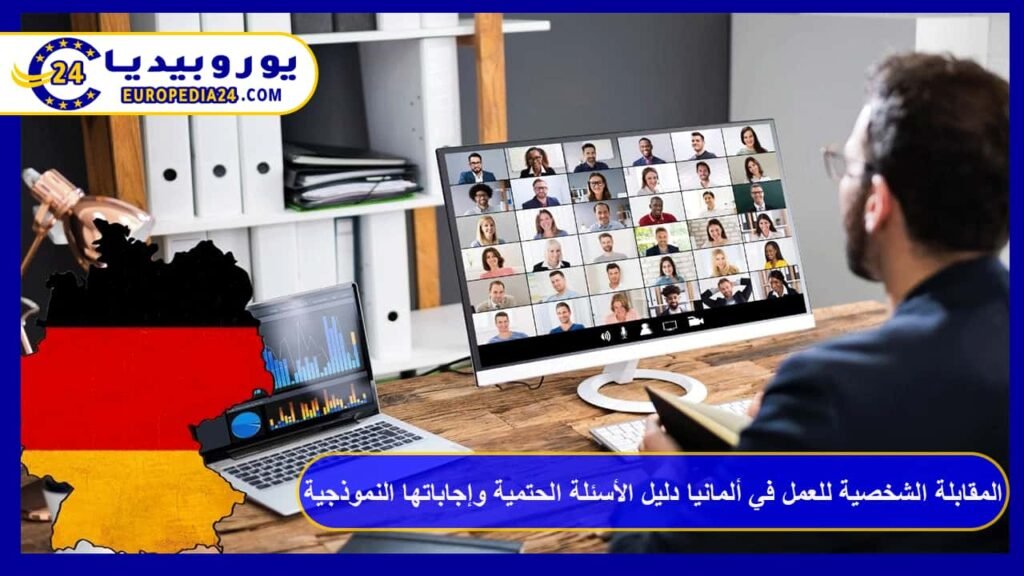
With rapid digital transformation and the widespread adoption of hybrid work models, job interviews in Germany have evolved into two main formats that foreign applicants should understand well.
The first, and most common for applicants from outside the European Union, is the initial online interview conducted through platforms such as Zoom or Microsoft Teams. The second is the final in-person interview at the company‘s headquarters in Germany. Both formats require thorough technical and psychological preparation.
- Online interviews: They are no longer just ordinary video calls. By 2026, German companies have begun using artificial intelligence algorithms to analyze tone of voice and body language during the first few minutes of the interview. Therefore, you should ensure a quiet, professional background, excellent lighting, and maintain direct eye contact with the camera lens rather than the screen.
- Face-to-face interviews: If you are invited to the company’s office, it means you have already passed about 80% of the evaluation process. From that point onward, your behavior is assessed from the moment you enter the reception area, including how you greet the hiring manager and your punctuality down to the exact minute and second.
Comparison of Job Interview Processes in Germany
| Aspect of comparison | Initial Online Interview (Online) | Final In-Person Interview (Vorstellungsgespräch) |
| Platform / Location | Teams / Zoom | Company headquarters in Germany |
| Primary Objective | Initial introduction and assessment of language proficiency and skills | In-depth psychological assessment and evaluation of personality fit with the team |
| Duration | 30 to 45 minutes | 60 to 90 minutes (may include a tour of the company) |
| Dress Code | Professional business attire for the upper body (shirt/blazer) | Complete classic business suit |
| Likelihood of Securing the Position | Qualifies you for the next stage with a 30% chance of success | Offers up to a 90% chance of receiving the final job offer |
5 Tricky Questions in a Job Interview in Germany and How to Answer Them
The mindset of hiring managers in Germany is centered on skillfully exploring your weak points to see how you perform under professional pressure.

They are not looking for perfect or overly emotional answers. Instead, they prefer realistic responses supported by facts, figures, and clear evidence from your previous professional experience. Below are the five most common questions and the ideal way to answer them successfully in a job interview in Germany:
- Tell us about yourself (Erzählen Sie uns etwas über sich): The biggest mistake is talking about your personal life. The ideal German-style answer should focus, within two minutes, only on your most recent professional achievements that are relevant to the position, following this formula: Previous experience + Current skills = Solving your company’s challenges.
- Why do you want to work for our company specifically? (Warum wollen Sie ausgerechnet für unser Unternehmen arbeiten?): The interviewer expects you to have researched the company’s website and reviewed its latest news or projects for 2026. Your answer should demonstrate how your professional values align with the company’s strategic vision and market development.
- What are your greatest weaknesses? (Was sind Ihre Schwächen?): Never say that you have no weaknesses or give the overused answer, “I work too hard.” Instead, mention a genuine technical weakness you previously had and explain the practical steps and training you undertook to overcome it and improve yourself.
- How do you handle conflicts within a team? (Wie gehen Sie mit Konflikten im Team um?): Germans highly value well-coordinated teamwork. You should describe a real situation from your previous experience where you had a disagreement with a colleague or manager, and explain how you resolved it through calm, professional communication based on facts, data, and the company’s best interests.
- Where do you see yourself in five years? (Wo sehen Sie sich in fünf Jahren?): Employers in Germany value long-term stability and loyalty because employee training is expensive. Your answer should emphasize your desire to grow professionally within the same company and develop leadership skills that contribute to the organization’s future goals.
Strict Cultural Rules for Success in the German Professional Environment
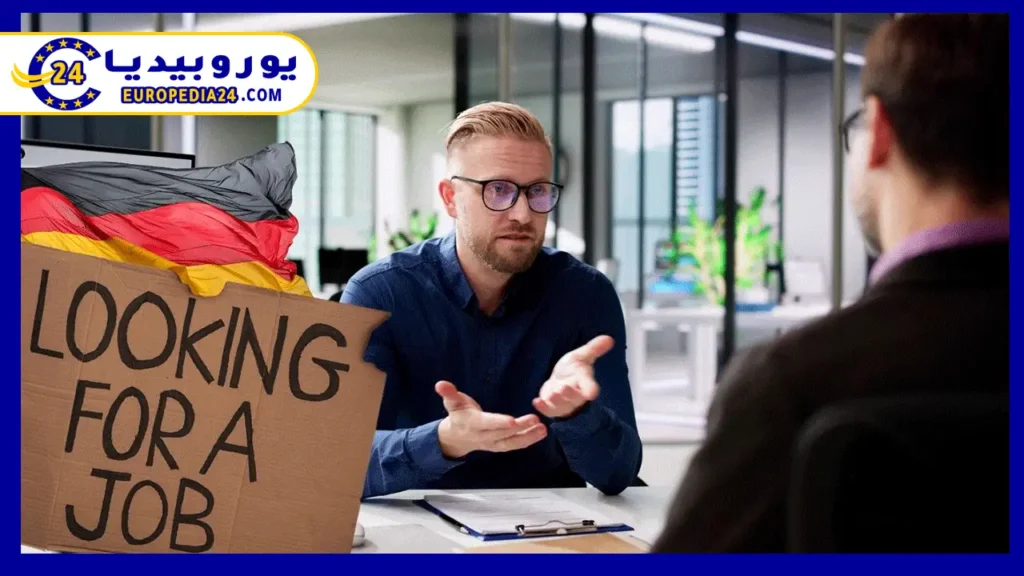
Successfully passing the technical part of a job interview in Germany is not enough if the German interviewer is put off by behavior that conflicts with the country’s professional culture.
There is what is known as the Deutscher Geschäftskodex (German Business Code), a set of unwritten rules by which employers evaluate you from the moment the conversation begins. You should pay close attention to the following essential details:
- Exceptional punctuality: In Germany, arriving exactly on time is often considered late. For an online job interview, you should enter the virtual waiting room at least 5 minutes before the scheduled time. For an in-person interview, you should arrive at the company’s office 10 minutes early. Germans often regard being even a few seconds late as a sign of disrespect and poor organization.
- Direct and serious body language: Germans prefer strong, direct eye contact because it reflects honesty and self-confidence. Avoid exaggerated smiles or excessive hand gestures, as they may be interpreted as signs of nervousness or a lack of professionalism.
- Professional appearance: Even if the position is with a technology startup that allows casual dress, your outfit for the first interview should be formal and conservative—a classic business suit in colors such as gray or navy for men, and elegant professional attire for women. This demonstrates respect for the workplace culture. Remember that your appearance reflects your seriousness about building a long-term career, which should also be considered when estimating your expected salary in relation to the cost of living in Germany.
How to Ask the Interviewer Questions at the End of a Job Interview in Germany
At the end of a job interview in Germany, the interviewer will almost certainly ask the traditional question: “Do you have any questions for us?” If your answer is simply “No,” you may immediately weaken your chances, as it can suggest a lack of enthusiasm or professional curiosity.
Based on practical experience, here are some strategic questions that can leave a strong impression:
- “What are the biggest challenges currently facing the department I would be joining in 2026?” (Was sind die größten Herausforderungen, vor denen die Abteilung, in der ich arbeiten werde, im Jahr 2026 steht?) — This question presents you as someone who is eager to contribute solutions and make a positive impact.
- “What does a typical workday look like for someone in this position at your company?” (Wie sieht ein typischer Arbeitstag in dieser Position in Ihrem Unternehmen aus?) — This demonstrates your genuine interest in imagining yourself as part of the team and becoming productive from day one.
- “What criteria do you use to evaluate success and performance during the probationary period?” (Welche Kriterien nutzen Sie zur Erfolgs- und Leistungsbeurteilung während der Probezeit?) — This is a very smart question that shows you are practical, results-oriented, and focused on measurable performance.
Frequently Asked Questions about Job Interviews in Germany
Is it necessary to conduct a job interview in Germany in German, or is English sufficient?
The language depends entirely on the nature of the job and the company. International tech companies and startups in Berlin and Munich often conduct interviews 100% in English. However, using a few simple German greeting phrases at the beginning and end of the interview leaves a very positive and professional impression and shows your genuine willingness to integrate into German society.
How long does it take to receive a response after a job interview in Germany?
German bureaucracy is known for being slow and highly detail-oriented, so the official response time usually ranges between two to four working weeks. If you do not hear back after two weeks, you may send a short and professional follow-up email to politely inquire about the status of your application and reaffirm your interest in the position.
Smart preparation based on understanding German culture is your secret weapon to successfully passing a job interview in Germany and moving toward global career and economic opportunities without limits. If you have an upcoming interview or want to know specific questions related to your field (engineering, medicine, programming, vocational training), you can share your specialty in the comments below and you will receive a prompt response.
Official sources & references
- Make it in Germany — the German government portal for skilled workers
- BAMF — Federal Office for Migration and Refugees
- Your Europe — official EU portal
Short answer for search intent
The job interview in Germany is the biggest obstacle and the decisive step that stands between your dream of immigrating and building a stable life in Europe's strongest economy and staying where you are. In practical terms: start with admission requirements, language rules and funding, then verify the exact university or program page before paying fees or planning travel.
Who this guide is for
This content is written for international and Arab students comparing study options, costs and admission routes in Germany. The added checkpoints help readers turn the information into a safer practical decision instead of relying on a general or outdated summary.
Before relying on the information
- Compare the article with the university or DAAD page because requirements vary by program and state.
- Check semester fees, health insurance, housing and proof-of-funds rules instead of relying on a single average cost.
- Track deadlines and required documents in one list so an application window is not missed.
Official and reliable references
Frequently asked questions
Can details differ from one German state to another?
Yes. For study, work, housing and local services, details may differ by state, city or authority. Always verify the responsible source for the place you are targeting.
Does this article replace official guidance?
No. The article explains the context and gives practical checkpoints, but it does not replace official websites or qualified advice when a legal or financial decision is involved.
Editorial note: This content was editorially reviewed on July 11, 2026, with clearer search-intent answers, official references and practical verification points added.
This post is also available in:
 العربية
  简体中文
简体中文  Hrvatski
  Nederlands
  Suomi
Suomi  Français
  Deutsch
  Íslenska
  Gaeilge
  Italiano
  日本語
日本語  한국어
한국어  Polski
  Română
  Русский
  Español
  Türkçe