Child Benefit in Germany 2026: Amount, Eligibility Requirements, and Application
How Much Is the Child Benefit in 2026?
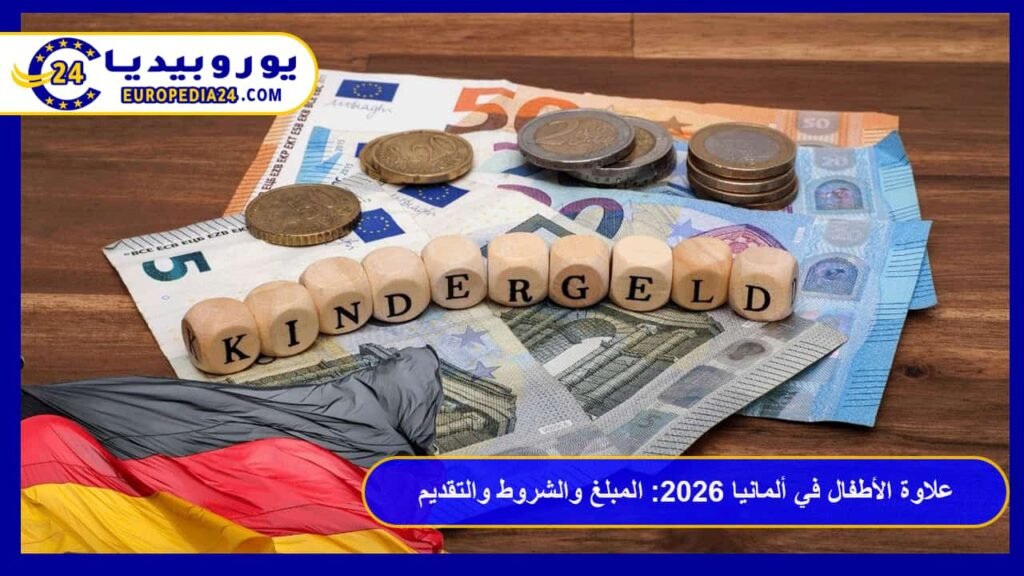
The amount is fixed for each child, and the following table shows what this rule means in practice for a family:
| Number of children | Monthly amount | Annual amount |
|---|---|---|
| One child | €259 | 3,108 € |
| Two children | 518 € | 6,216 € |
| Three children | 777 € | 9,324 € |
| Four children | 1,036 € | 12,432 € |
The amount is paid for each full month and transferred to a German bank account in the name of one of the parents. Kindergeld is not subject to income tax and is not counted as income when calculating most other benefits.
Who Is Entitled to Child Benefit?
The basic requirement is that you have a residence or habitual place of residence in Germany and that the child lives with you in the same household. As for nationality, the details are important:
- German citizens and citizens of EU countries and the European Free Trade Association: They are entitled to it as soon as they reside and work in Germany or have legal residence there.
- Citizens of other countries: You must have a residence permit that allows you to work. Some temporary permits — such as certain study permits or short-term residence permits for humanitarian reasons — do not grant entitlement.
- Asylum seekers while their applications are being processed: They are not entitled to Kindergeld, but the situation changes after they obtain protected status.
There is also a procedural requirement that stops many applications: you must provide the tax identification number (Steuer-Identifikationsnummer) for both yourself and the child. The child’s number is issued automatically after birth registration or after address registration (Anmeldung) for those arriving from abroad, and it is sent by post. The application cannot be completed without it.
Up to What Age Does the Benefit Continue?
| Child’s status | Up to what age |
|---|---|
| General rule, with no additional conditions | 18 years |
| Studying, undergoing vocational training (Ausbildung), or attending university | 25 years |
| Registered as a job seeker with the Employment Agency | 21 years |
| Disability that arose before the age of 25 and prevents the child from supporting themselves | No maximum age |
| Waiting period between two stages of education (up to 4 months) | Within the age limit of 25 |
How to Apply — and the Trap That Can Cost You Real Money
The application is submitted to the Familienkasse of the Federal Employment Agency, either electronically through their portal or on paper. Anyone who is already receiving the allowance doesn’t need to submit a new application because of a change in the amount; the adjustment is made automatically.



🔴 The trap: The benefit is only paid retroactively for the six months preceding the date on which the application is received. In other words, delaying the application for a full year means losing six months of payments — more than €1,500 for one child — with no way to recover them. Submit the application as soon as your documents are complete, even if you are unsure whether you qualify.
Child Benefit or the Tax Allowance (Kinderfreibetrag)?
Do not choose between the two. The German system pays you the benefit monthly, and then, when you file your annual tax return, the tax office automatically carries out a comparison (Günstigerprüfung) between the Kindergeld you received and the value of the child tax allowance. If the tax allowance is more beneficial for you — which usually happens with higher incomes — the allowance is applied and the amount you received is deducted from it. You do not need to submit any additional application.
Three Common Mistakes
- Believing that the amount increases with each additional child. It does not increase; the amount is fixed for each child since it was standardized.
- Failing to notify Familienkasse when circumstances change. Finishing school or university, the child moving to live outside Germany, or starting a full-time job — all of these changes must be reported immediately. Otherwise, the amounts received may become debts that must be repaid.
- Confusing it with Kinderzuschlag. This is a completely different benefit aimed at working families with limited income. It must be applied for separately, its amount is determined annually, and it does not cancel your entitlement to Kindergeld.
You can find the rest of the procedures related to life in Germany — from address registration to tax classes and health insurance — organized in the comprehensive Germany guide for Arabs.
This page is for general informational purposes only and does not constitute legal or tax advice. Amounts and eligibility requirements change annually and may vary depending on your personal circumstances, so check with Familienkasse or a tax advisor before making any decision.
Official Source for Verification
This page explains the procedures in a simplified format for Arabic-speaking readers. For any binding details or official updates, refer directly to the competent authority: the German Federal Employment Agency (Bundesagentur für Arbeit).
This post is also available in:
 العربية