Before Packing Your Bags: A Guide to the Cost of Traveling to Germany in 2026
Since the beginning of 2026, travel and living budgets across Germany’s federal states have seen noticeable changes due to fluctuations in global energy prices, international airfare costs, and new administrative fees introduced by embassies for Schengen visas and national work visas.
Therefore, we will provide a detailed cost breakdown covering accommodation, flights, food, and transportation, giving you all the realistic figures you need as a reliable financial reference to plan your journey with clarity and confidence.
Key Factors That Determine the Cost of Traveling to Germany

When planning your budget and calculating the cost of traveling to Germany, it is important to understand that there is no fixed amount that applies to all travelers. Total expenses vary depending on your personal choices and the lifestyle you prefer during your stay.
Understanding the factors and variables that influence prices within the European market will help you manage your budget more effectively, avoid unexpected expenses, and reduce unnecessary costs from the very first day of your trip.
- Trip Timing and Peak Seasons: Flight tickets and hotel bookings become significantly more expensive during the summer season (from May to September), coinciding with school holidays and major cultural festivals, as well as Christmas markets in December. In contrast, these costs can drop by nearly half during the winter off-season months of January and February.
- Target State and City: Living costs and prices vary considerably between German regions. Wealthier southern and western cities such as Munich, Frankfurt, and Stuttgart consistently rank among the most expensive for accommodation and services, while eastern and northern cities such as Berlin, Leipzig, and Bremen offer more budget-friendly alternatives.
- Type of Entry Visa: Financial requirements and proof of funds differ depending on the purpose of travel. For short-term tourism (Schengen visa), a standard bank statement is usually sufficient, while student visas and long-term job-seeker visas often require a blocked account with a specific amount of funds.
Cost of Traveling to Germany
To organize your financial planning and avoid confusion when estimating expenses, it is essential to break down the mandatory costs you must cover before arriving at a German airport into clear categories.



These expenses represent the core components of any trip to Europe, and preparing for them in advance ensures a smoother application process and compliance with the regulations and requirements in effect for 2026. The main costs of traveling to Germany include the following:
Visa Fees
The standard official fee for a Schengen tourist visa or a German national work visa is currently €80 for adults and approximately €40 for children aged 6 to 12, while children under six are exempt from visa fees.
You should also take into account the service fees charged by authorized visa application centers, such as VFS Global, which handle appointments and biometric data collection. These fees generally range between €30 and €40 per application.
Airfare Costs
Economy-class airfare prices are heavily influenced by how early you book and the airline you choose. Currently, round-trip flights from the Middle East and North Africa to major German airports such as Frankfurt, Munich, and Berlin typically range between €250 and €550.
You may find lower fares by choosing indirect transit flights or traveling during the middle of the week.
Hotel and Accommodation Budget
Accommodation is often the largest expense and the main factor affecting your daily travel budget when calculating the cost of traveling to Germany. Available options in 2026 cater to a wide range of budgets and travel preferences.
- Youth hostel: An ideal option for young travelers and solo visitors, with prices ranging from €25 to €45 per night for a single bed in a shared room.
- Budget and Mid-Range Hotels (3-Star): These provide greater privacy and comfort for traditional tourists, with prices starting from €70 to €120 per night for a double room.
- Fully Furnished Apartments (Airbnb): A practical and cost-effective choice for families, with prices starting from €85 per night. They also allow you to cook your own meals and reduce restaurant expenses.
Table of Living Costs and Daily Services in Germany for 2026.
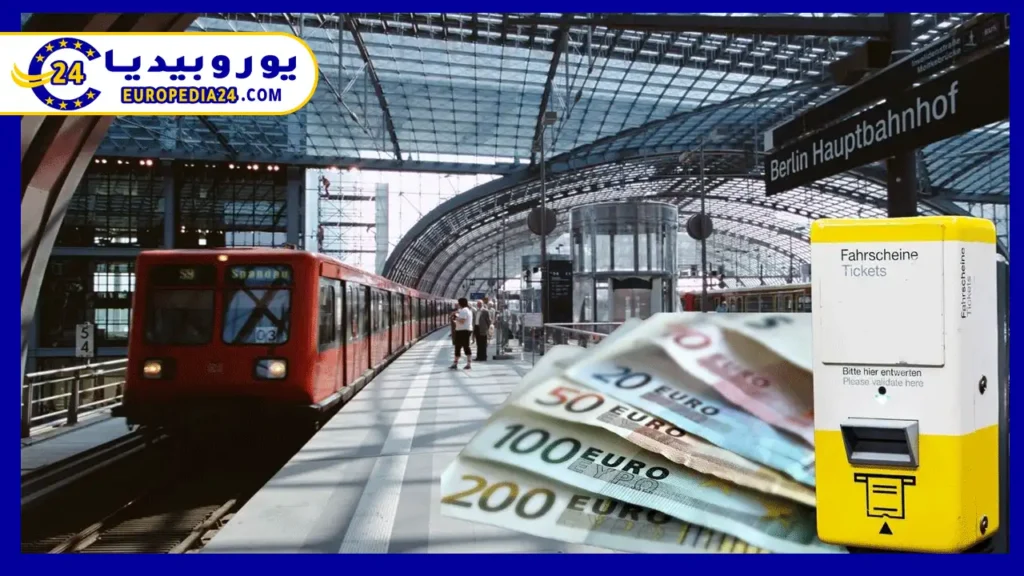
To build a realistic and accurate picture of the cost of traveling to Germany that you will actually pay once you arrive, we have compiled current market prices for 2026.
These figures are based on up-to-date live indicators aligned with real-time smart research standards. They serve as a digital guide that helps you avoid tourist traps and unnecessary expenses.
| Daily Expense Category | Average Cost in Euros (€) | Type of Facility or Service | Smart Professional Saving Tip |
| Meal at a Budget Restaurant | €12 to €18 | A complete individual lunch meal | Completely avoid tourist restaurants located in major central squares, and instead rely on Turkish and Asian fast-food restaurants that are more budget-friendly. |
| Weekly Grocery Shopping | €50 to €70 | Buying essential items from supermarkets | If your stay extends for weeks, shop exclusively at Germany’s well-known discount supermarket chains such as Aldi, Lidl, and Netto, and avoid luxury stores. |
| Transportation Ticket | €58 per month | The unified Deutschlandticket | The greatest transportation advantage in Europe gives you unlimited monthly travel on all buses, metro lines (U-Bahn and S-Bahn), and regional trains across Germany. |
| Buying a small bottle of water | €0.50 to €1.50 | Bottled drinking water | Tap water in Germany is completely safe, clean, and subject to strict medical regulations. You can buy one bottle from the supermarket and refill it for free throughout your trip. |
Reasons that increase your expenses in Germany and how to avoid them
Many visitors and first-time travelers fall into tactical mistakes caused by a lack of understanding of the strict system applied in German cities, which leads to a sudden and frustrating increase in their planned budget.
Being aware of these loopholes and applying the suggested alternatives ensures that you protect your travel funds and make better use of them for real experiences and destinations:
- Buying long-distance ICE train tickets on the same day of travel: German high-speed trains connecting major cities become extremely expensive if booked on the same day. The best solution is to book weeks in advance via the Deutsche Bahn app or website to benefit from early-bird discounts.
- Ignoring the deposit system known as Pfand: When buying any plastic water bottle or soft drink container, a 25-cent deposit is automatically added to the price. Do not throw the bottle away—collect it and return it to the automated machines in any supermarket to get your money back in cash.
- Riding public transport without validating your ticket: The immediate fine in Germany for using the metro or buses without a valid and stamped ticket is €60. The law is enforced strictly, with no tolerance or acceptance of tourist excuses.
Compare your options: Germany budget or Sweden, Austria, and Spain?
Understanding the financial factors and price levels of your trip opens broader comparison opportunities between the quality of life and available opportunities in other major European destinations, helping you make a decision based on a realistic feasibility study for your future.
If you find that your current budget is suitable and you want to turn this temporary step into long-term professional stability with well-paid job contracts, you can learn about the requirements for the Opportunity Card visa in Germany, which makes legal job searching easier without complications
If you are one of the ambitious medical professionals, do not miss learning about the steps for recognizing nursing qualifications in Germany to secure an immediate job with government support and very attractive salaries.
If you are looking for a fascinating Scandinavian natural diversity and a highly advanced digital society, you can learn about the daily budget, visa requirements, and the most beautiful cities before traveling to Sweden, or head toward the charm of classical architecture through the Austria tourism map, while the warm and affordable Latin atmosphere remains accessible by learning the steps for traveling to Spain so you can define your path with great precision.
Frequently asked questions about the cost of traveling to Germany
How much is the average daily budget per person in Germany?
For a budget traveler with limited spending, the daily cost ranges between €60 and €90, including hostel accommodation, fast food meals, and transportation using a unified transport pass. For a mid-range traveler who prefers 3-star hotels and dining at local restaurants, the daily cost ranges between €130 and €200.
Do travel costs differ between family travel and solo travel?
Yes, significantly. However, family travel opens up smart saving opportunities not available to solo travelers, such as renting entire apartments (Airbnb) that allow cooking at home and reducing food expenses by more than 50%, as well as benefiting from family transport tickets that may include children for free in some regions.
Germany remains one of the most organized European destinations, rich in experiences and culture. Smart financial planning is the only way to ensure you enjoy every euro spent among its historic streets and castles. Are you planning to visit for short-term tourism, or are you looking for a real job opportunity and long-term residency? If you have any questions about calculating travel costs for your family or current flight prices in your country, feel free to leave a comment.
Short answer for search intent
Calculating the cost of traveling to Germany is the first crucial step for any traveler, whether heading to Europe’s largest economic powerhouse for tourism, job hunting, studying, or long-term settlement. In practical terms: start with admission requirements, language rules and funding, then verify the exact university or program page before paying fees or planning travel.
Who this guide is for
This content is written for international and Arab students comparing study options, costs and admission routes in Germany. The added checkpoints help readers turn the information into a safer practical decision instead of relying on a general or outdated summary.
Before relying on the information
- Compare the article with the university or DAAD page because requirements vary by program and state.
- Check semester fees, health insurance, housing and proof-of-funds rules instead of relying on a single average cost.
- Track deadlines and required documents in one list so an application window is not missed.
Official and reliable references
Frequently asked questions
Can details differ from one German state to another?
Yes. For study, work, housing and local services, details may differ by state, city or authority. Always verify the responsible source for the place you are targeting.
Does this article replace official guidance?
No. The article explains the context and gives practical checkpoints, but it does not replace official websites or qualified advice when a legal or financial decision is involved.
Editorial note: This content was editorially reviewed on July 11, 2026, with clearer search-intent answers, official references and practical verification points added.
This post is also available in:
 العربية
  简体中文
简体中文  Hrvatski
  Nederlands
  Suomi
Suomi  Français
  Deutsch
  Íslenska
  Gaeilge
  Italiano
  日本語
日本語  한국어
한국어  Polski
  Română
  Русский
  Español
  Türkçe