German Tax Law: Key Rules Explained
Taxes are the main source of state revenue, which enables it to finance schools, universities, hospitals, road construction, and others.
The state may also impose taxes on certain harmful products such as cigarettes, in order to correct citizens’ behavior and stay away from things that are harmful to health.
We will provide you through Europedia 24 europedia24.com Tax law and how to deal with it as well as who must pay taxes in Germany.
Advantages of the Tax Law in Germany
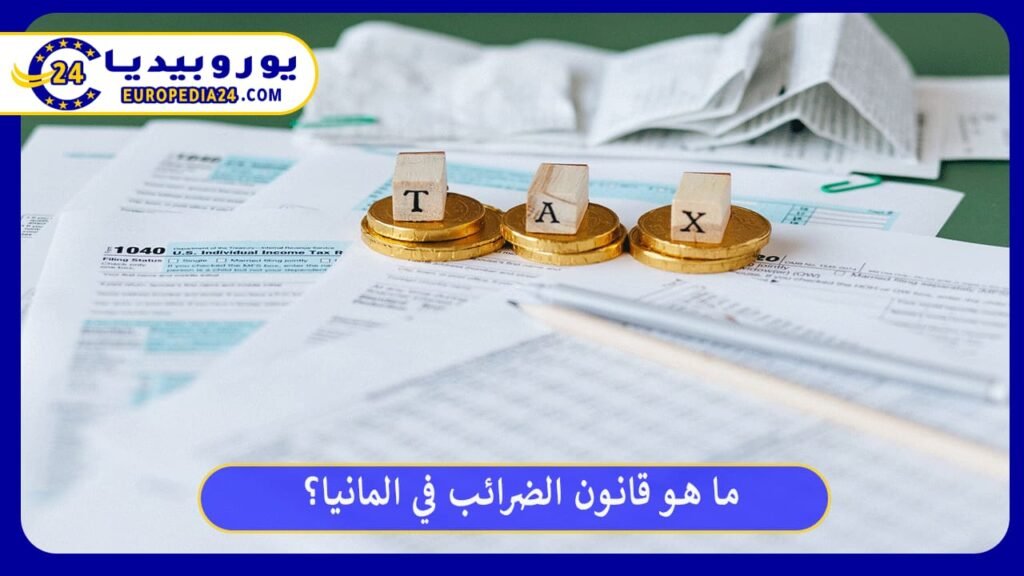
The tax law in Germany guarantees the rights of all citizens as well as their duties towards the state in order to collect the taxes due on each individual, and the advantages of this tax law or tax system in general are the following:
- Lower taxes in Germany than in other countries.
- Considering the economic feasibility of imposing tax collection.
- The tax system respects the principle of taxpayer privacy.
- Having a system to avoid double taxation.
- The need to ensure fair distribution within society.
- The amount of taxes corresponds to the volume of services provided by the government.
Also Read – How to Working in Germany without a degree?



People who must pay taxes in Germany
Germany’s tax law requires everyone with an income to pay income tax for employed people, which also means payroll tax, while large corporations pay corporate income tax.
There are also other types of taxes that people have to pay in Germany, which depend on individual circumstances, such as the following:
- Pet owners such as dogs pay a tax on owning a dog.
- Car owners pay a car ownership tax.
- People who register a trade in Germany pay trade tax.
Also Read – Top 7 Types of employment contracts in Germany and its conditions
What is a Tax Identification Number?
A tax identification number is the tax identification number of each person who registers their residence in Germany as a principal place and is required to pay taxes.
This number consists of 11 numbers that are given to the person and that the number remains valid for life, while newborns in Germany receive a tax identification number but shortly after the date of birth.
This number helps in making it easier to communicate with Tax Office In Germany for the purpose of obtaining a service or otherwise, it is also considered as the basis for the filing of the tax return.
Also Read – What are the Duties and Rights Job Center in Germany And how to get it
Types of Taxes in Germany

Germany has many types of taxes that are appropriate to the nature of life there and are imposed on everyone residing in Germany, and these taxes are as follows:
Income tax in Germany
The German tax law stipulates that there are many different types of taxes that a person in Germany must pay.
Income tax is one of the most important types of Labor Taxes in Germany, where most of the state’s revenues are collected from all employees and individuals working within the state or on their own account.
There are seven different types of Income tax in GermanyTherefore, a person who earns a fixed income must pay the tax in implementation of the provisions of the tax law in Germany, and the types of income are as follows:
- Self-employment.
- Non-free labor.
- Projects of commercial entities and institutions.
- Agriculture and Craft Professions.
- Assets.
- Rent and rent.
- Pensions.
But there are also some other types of income that do not have to pay any kind of tax, which are the following:
- Parental allowance.
- Unemployment benefits.
- Bafog Student Loan.
- Scholarships.
It should also be noted that people who have small jobs or whose annual income does not reach the level set for paying taxes under Germany’s tax law cannot pay income tax, especially if the income is less than €10,908.
Payroll Tax
Payroll tax is a type of income tax, which means that every employee has to pay tax on their salary.
Payroll tax is automatically deducted by the employer and then transferred to the responsible tax office, based on tax exemptions and marital status that help determine each person’s tax bracket.
Also Read – Tax-Free Shopping for Tourists in Spain And how to get it
Sales and Services Tax in Germany
Germany’s tax code fully guarantees the rights of all citizens within Germany, so sales and service tax is imposed on everyone.
This tax is imposed on everyone in Germany, because they all use various services, such as going shopping, buying different products, train tickets, and more.
The sales tax is approximately 19% or 7% discounted which is directly added to the price of the product or service provided to the customer.
The target party, whether shopping or otherwise, then transfers the sales tax to the German tax office.
Corporate Tax in Germany
Corporate tax is levied on a person who intends to invest in Germany by starting a business in the form of incorporating a company.
These companies or legal entities are not required to pay income tax but pay what is known as corporate tax based on Germany’s tax law.
Corporate tax is calculated on the basis of the revenue generated by the company as a legal entity in the year.
Trade Tax in Germany
Business tax is very important in Germany especially for those who are self-employed, but with the exception of freelancers, lawyers, doctors, journalists, and others.
The commercial tax is one of the most important sources of income for the state, as it is a type of compensation that companies pay to the state in order to use it in building or repairing roads, among others.
Also Read – How to Get Opportunities Working in Australia The most important professions required
Church Tax in Germany
Church tax in Germany is the main source of income for the country’s major churches, and is paid if the person is already a resident of Germany.
The responsibility lies with the Tax Office for the administration of the church tax, with the tax in Bavaria and Baden-Württemberg being around 8%, while in the rest of the federal states it is about 9%.
Import and Export Taxes of Goods in Germany
If you want to import and export goods in Germany, you must contact the Tax Office in order to determine what kind of taxes will be levied.
Importing and exporting within the EU is free, but there are some products that are subject to strict rules, including plants, antiques, weapons, medicines, and others.
However, if you are importing and exporting outside the EU, you should contact the tax office to find out what products are and what taxes are imposed on them based on the German tax law.
Also Read – How to Get Job opportunities in Germany without a language
Tax Brackets in Germany

As mentioned, the tax law in Germany requires all people working in the country to pay taxes, but this varies from person to person based on the tax bracket that is taxed on the salary.
The tax code in Germany classifies people into 6 basic tax brackets, but the tax office determines each person’s bracket based on many different factors, such as the following:
- Tax Bracket I: These include people who are single, divorced, living separately or widows.
- Tax Bracket II: Include single parents who live with their children but are not married and are entitled to child allowance or child benefit.
- Tax Bracket III: Widows are especially included in the year of the husband’s death and the following year.
- Tax Bracket IV: The standard SIM card is for couples, as it is very useful especially if the couple earns the same amount.
- Tax Bracket V: It includes pairs where it is considered the counterpart of the tax bracket III.
- Tax Bracket VI: This segment applies in case the person has other functions besides the primary function.
Also Read – What Are They E-commerce in Germany And its advantages and disadvantages?
How to Calculate Taxes in Germany

You can calculate taxes in Germany easily by using a tax calculator that helps you show your net salary after deducting taxes, insurance, etc., in accordance with the application of the German tax law.
You must log in to the official website of the BruttoNettoRechner Then write the basic amount of your salary in the first column specifying whether the salary is monthly or annually.
You need to select the category you belong to in order to determine the tax bracket, with the state you reside in, the zip code of the region and the occupation, so that you can calculate accurately.
Also Read – Learn How Tax Refund in Germany With ease
Frequently Asked Questions on Tax Law in Germany
Do Muslims pay taxes to religious entities?
Only state-recognized religious groups are taxed in the public sector, and therefore Muslims do not have to pay any religious tax in Germany.
How much is the tax amount in Germany?
The tax rate in Germany is between 14% and 42% if you have an income greater than 10908.
Short answer according to research intention
Germany’s tax law is of great importance within the country, as it regulates the amount of taxes to be paid whether you buy any products, receive a salary, or go to any café or restaurant. In short: start with the admission requirement, language, and funding, then check the details of the university or program before arranging travel or paying any fees.
Who benefits from this guide?
This content is aimed at Arab students and those planning to study or train in Germany. Therefore, checkpoints have been added that help you turn information into a practical decision while reducing the risk of relying on general or outdated information.
Before you rely on the information
- Compare the admission requirements in the essay with the university page or DAAD, as the requirements vary by program and state.
- See the actual cost: Semester fees, health insurance, housing, and proof of financing calculation, if applicable.
- Keep the application dates and required documents in one list so you don’t miss an important appointment.
Official Sources and Reliable References
Frequently Asked Questions
Do the details vary from German state to state?
Yes, in subjects such as study, work, housing, and local services, details may vary by state or city, so you should consult the responsible party in the target location.
Does this article replace the official source?
No. The article explains the image and gathers important checkpoints, but does not replace official websites or specialist advice when there is a direct legal or financial impact.
Editorial Note: This content was edited on July 11, 2026 to add a clearer answer to the researcher’s intent, official sources, and practical checkpoints that enhance trust and expertise.
This post is also available in:
 العربية
  简体中文
简体中文  Hrvatski
  Nederlands
  Suomi
Suomi  Français
  Deutsch
  Íslenska
  Gaeilge
  Italiano
  日本語
日本語  한국어
한국어  Polski
  Română
  Русский
  Español
  Türkçe