Sick Leave in Germany: How to Obtain It
Workers are allowed to obtain them on the condition that the worker is subject to the official labour law of the country and works legally in one of the required jobs in Germany.
Of course, there are some exceptions that force the official authorities to reject the request for a leave, and here many wonder if the leave is deducted from the salary or is it paid?
What is sick leave in Germany?
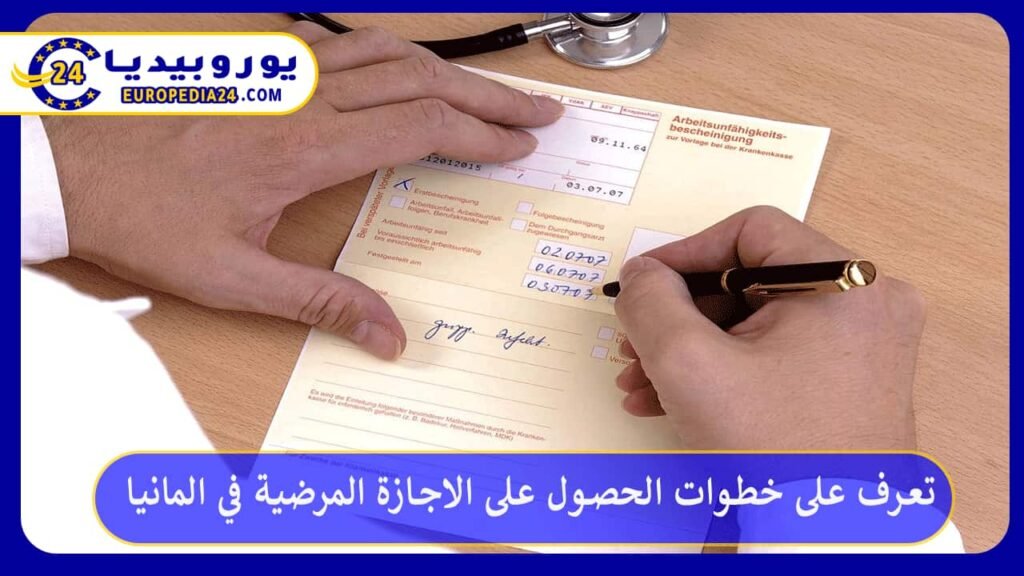
Sick leave in Germany is a request made by a worker or employee to an employer indicating that he or she wants to take leave because he or she is unable to work on the specified day due to illness.
This leave is considered one of the rights of state employees, as there is no German law that emphasizes the employee’s work in the event that he feels ill health that may negatively affect the results of work.
A medical report issued to prove the employee’s eligibility for leave is known as a medical report to explain the reasons for the employee’s absence from work, and in German Arbeitsunfahigkeitsbescheinigung, it can be abbreviated to AU.



Also Read – Learn About the System Health Insurance in Belgium
How to get sick leave in Germany
Obtaining sick leave in Germany is very easy, it does not require any complicated conditions or many different steps.
All you need to do if you feel unable to work on official days is to go to your line manager or employer to apply for sick leave in Germany.
You are not required to declare the type of illness you are experiencing, but if you can specify how long you will be absent from work, it must be included in your employer’s application.
You can contact your employer or line manager, via phone call or email, to let them know.
Also Read – Learn About Law Working Hours in Germany and the maximum allowable
Steps to prove sick leave in Germany

Although it is easy to obtain sick leave in Germany, there are some employers who require proof from the employee that he or she has a health condition that prevents him from completing his or her work.
The steps to obtain proof of sick leave in Germany are as follows:
- You should contact a doctor to request a medical report on the employee’s health condition in order to submit it to the employer to prove the reason for his absence from work.
- The doctor issues three copies of the medical report, provided that the patient receives one, the second is sent to the employer, and the third goes automatically to the Health Insurance in Germany.
- The doctor does not share any details of the patient’s medical report with anyone else.
- The doctor determines how long the patient needs as time off work.
It should be noted that there are some employers that require the submission of the medical report from the first day you wish to obtain leave, in case you are unable to go to work, while others allow the submission of proof on the third day.
Also Read – Get to Know Minimum Wage in Germany and the number of hours of work allowed
Cases of deduction of sick leave from salary in Germany

The idea of deducting sick leave from salary in Germany varies from case to case, depending on the nature of the employee’s intention to take it due to illness.
If the employee’s sick leave in Germany is less than 6 weeks, the employer or company must continue to pay the salary without any deductions at all as required by the German Labour Law.
However, if the employee’s sick leave exceeds 6 weeks, the organization for which he works will not have to pay the salary in full, but the number of vacation days will be deducted from the monthly salary.
Despite the deduction from the salary, you will not incur any damages at all, as the insurance company will pay a compensation amount, which is less than the employee’s actual salary, so that he will be able to return to work again.
Also Read – Get to Know Professions Salaries in Sweden The most important conditions of work
The Sick Benefit Act for Children in Germany
Sick leave in Germany is not limited to workers only, but there are many other forms that fall under this name as well, most notably the Sick Leave Act in Germany for children.
The Child Sickness Benefit Act in Germany deals with cases where the employee has children with a health problem and needs ongoing medical care and follow-up.
Here, the parent or guardian has the right to benefit from the Child Sickness Benefit Act in Germany, where the beneficiary can stay at home for an estimated 30 days during the year, in order to take care of the young child.
It should be noted that the specific period varies based on the assessment of the guardian’s situation, in the case that he has many children who need care, here the duration of the leave increases to 65 days during the year.
Sick leave in Germany does not interfere with the Child Sickness Benefit Act, in the sense that an employee is entitled to sick leave separately, even if he or she is on leave to care for his or her children.
Accordingly, in the case of both cases, the number of leave for the father or mother in the case of one child is 60 days, and in the case of more than one child, the number of vacation days increases to 130 days.
In order to receive child sickness benefits in Germany, the parent must submit a health certificate to his or her employer in order to prove that the child needs full care due to his or her illness.
Not only that, but there is another requirement for this type of sick leave in Germany, which is that the sick child must be under 12 years old or have special needs.
Also Read – What is the Most Important Professions in Demand in Liechtenstein How to get a work visa?
Frequently Asked Questions on Sick Leave in Germany
Is it possible to refuse sick leave in Germany?
The manager or employer does not have the right to refuse sick leave in Germany, but the employee may be required to obtain proof of sick leave, known as a medical report to prove the reason for absenteeism, which is obtained by the treating doctor, and is coded by the AU.
Do I have to stay at home after taking sick leave in Germany?
Obtaining sick leave in Germany does not require the need to stay at home, as the patient has the right to go outside the home, in addition to the possibility of traveling in and out of Germany freely, the nature of the patient’s health condition controls his ability to go outside the home or not.
Short answer according to research intention
Sick leave in Germany is one of the most important vacations that a worker takes when he feels unable to go to work due to illness. In short: start by identifying the occupation, state, and language level, then compare the gross salary to the net and visa or work permit requirements.
Who benefits from this guide?
This content is aimed at job seekers in Germany and those who want to understand salaries, taxes and labour market conditions. Therefore, checkpoints have been added that help you turn information into a practical decision while reducing the risk of relying on general or outdated information.
Before you rely on the information
- Check for recognition of the qualification if the job is regulated or related to a professional licensure.
- Don’t compare salaries without counting taxes, insurances, and the cost of housing in the target city.
- Use only the employment contract or job offer from a trusted party and review the details before sharing any sensitive documents.
Official Sources and Reliable References
Frequently Asked Questions
Do the details vary from German state to state?
Yes, in subjects such as study, work, housing, and local services, details may vary by state or city, so you should consult the responsible party in the target location.
Does this article replace the official source?
No. The article explains the image and gathers important checkpoints, but does not replace official websites or specialist advice when there is a direct legal or financial impact.
Editorial Note: This content was edited on July 11, 2026 to add a clearer answer to the researcher’s intent, official sources, and practical checkpoints that enhance trust and expertise.
This post is also available in:
 العربية
  简体中文
简体中文  Hrvatski
  Nederlands
  Suomi
Suomi  Français
  Deutsch
  Íslenska
  Gaeilge
  Italiano
  日本語
日本語  한국어
한국어  Polski
  Română
  Русский
  Español
  Türkçe